
Choosing tapware is one of the most important decisions when planning a bathroom renovation. While taps and mixers might seem like small details compared with tiles, vanities and showers, they have a significant influence on the overall appearance, functionality and long term performance of the room.
The right tapware should complement your bathroom design, feel comfortable to use and withstand everyday wear. It should also be compatible with your plumbing, water pressure and chosen fixtures. A beautiful tap might look perfect in a showroom but that does not necessarily mean it will be suitable for your home.
When choosing tapware, it is worth looking beyond the latest trends. Consider the finish, construction quality, replacement parts, warranty, installation requirements and how easily the product can be cleaned. These details can make the difference between a bathroom that continues to look and work well for years and one that becomes difficult or expensive to maintain.
For homeowners planning bathroom renovations in Adelaide, making these decisions early is particularly important. Tapware needs to be selected alongside the vanity, basin, shower, bath and plumbing layout to ensure everything works together.
Here are seven practical tips to help you choose tapware that will age well.
1. Choose a Tapware Finish That Will Stand the Test of Time
The finish is often the first thing people notice when choosing tapware. It helps establish the overall style of the bathroom and can either complement or contrast with the surrounding materials.
Popular finishes include chrome, brushed nickel, brushed brass, matte black and polished finishes. Each creates a different look, but they also vary in how they show fingerprints, water marks and everyday wear.
Before committing to a finish, think about how it will look alongside your tiles, vanity, shower screen, handles and accessories.
Chrome tapware
Chrome remains one of the most versatile choices for bathrooms. Its reflective surface creates a clean, bright appearance and works with almost any colour palette.
It is particularly suitable for homeowners who want a classic finish that will not quickly date. Chrome can complement contemporary, traditional and minimalist bathrooms, making it a reliable option when choosing tapware for a long-term renovation.
Its reflective surface can show fingerprints and water spots, so regular cleaning is still required. However, its widespread availability also makes replacement products and matching accessories relatively easy to find.
Brushed nickel tapware
Brushed nickel offers a softer appearance than polished chrome. Its muted finish works well with warm neutrals, natural stone-look tiles, timber cabinetry and understated bathroom designs.
It is a good option for homeowners who want something slightly different without choosing a finish that feels overly decorative.
The brushed texture can make everyday marks less noticeable than on highly reflective surfaces. However, cleaning requirements will depend on the manufacturer’s finish and care instructions.
Brushed brass tapware
Brushed brass has become a popular choice for homeowners looking to introduce warmth and character into their bathrooms.
It pairs particularly well with cream, beige, white and earthy colour palettes. It can also create a beautiful contrast against darker tiles or natural timber finishes.
When choosing tapware in brass, it is important to check the exact finish. Some products have a consistent brushed appearance, while others may have a more decorative or changing surface. The appearance can vary significantly between manufacturers.
Brushed brass can look beautiful, but it is worth considering whether you will still enjoy the finish in ten years. If you are unsure, use it as an accent rather than making every fixture in the room a feature.
Matte black tapware
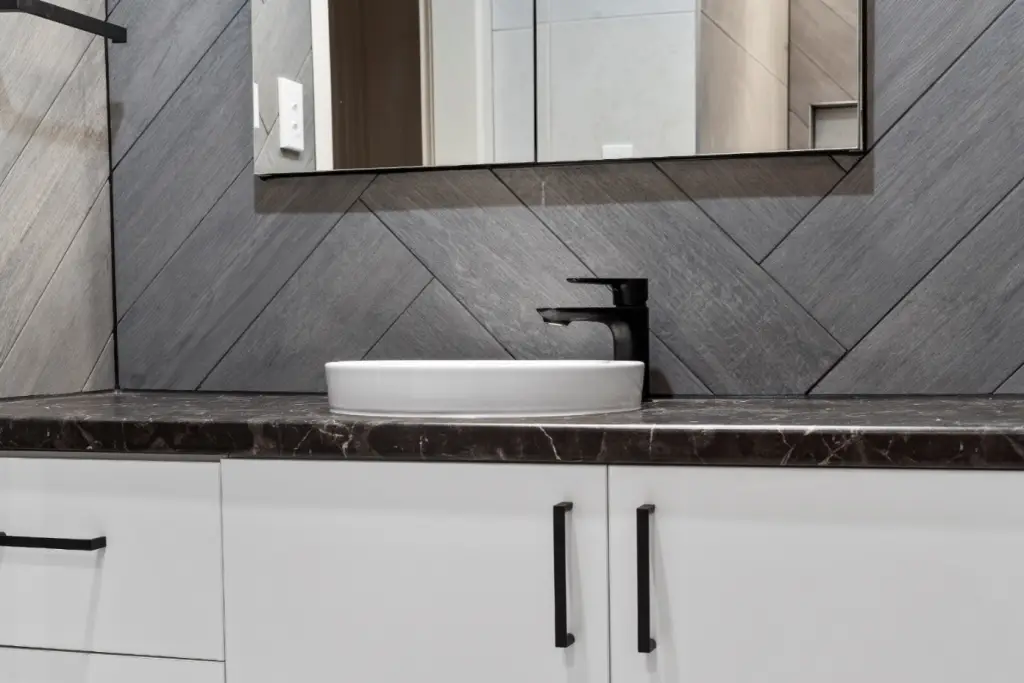
Matte black can create a strong, contemporary look. It works particularly well with white tiles, concrete-look surfaces, natural stone and minimalist bathroom designs.
However, darker finishes can show mineral deposits, soap residue and dust, particularly in areas with hard water or frequent use. The finish also needs to be cleaned according to the manufacturer’s instructions to avoid damage.
If you love matte black, consider using it selectively and checking the manufacturer’s cleaning and warranty information before purchasing.
Think about the whole bathroom
When choosing tapware finishes, consistency is important, but every fitting does not necessarily need to be identical.
You may choose chrome tapware with matching shower accessories, for example, while introducing a different finish through cabinet handles or lighting. The key is to make the combination feel intentional.
Collect physical samples where possible and compare them against your tiles, vanity and other finishes in natural and artificial light. A finish that looks beautiful under showroom lighting can appear quite different in your bathroom.
2. Prioritise Functionality Over Appearance
A tap can be visually appealing, but its everyday functionality should always come first.
Think about how each fitting will be used, who will use it and whether it suits the layout of the bathroom. A product that looks impressive in a display can quickly become frustrating if it is difficult to operate, splashes water or does not provide enough clearance.
When choosing tapware, consider the following areas.
Basin mixers
Basin mixers are available in different heights, shapes and installation styles. The correct option will depend on the basin and vanity you select.
A tall mixer may suit a countertop basin, while a shorter mixer may be more appropriate for an integrated basin or a compact vanity.
Check the distance between the spout and the basin, including the height and reach. The water should flow comfortably into the basin without splashing onto the surrounding benchtop.
You should also consider how much space is available around the mixer. If the tap is positioned too close to a wall or splashback, it may be difficult to operate or clean.
Wall-mounted tapware
Wall-mounted basin mixers can create a streamlined appearance by keeping the vanity surface clear. They are particularly popular in contemporary bathroom designs.
However, they require careful planning because the plumbing and in-wall components need to be installed before the wall is finished.
The spout reach, mounting height and basin position must all be considered together. If these measurements are incorrect, the water may fall in an awkward position or create unnecessary splashing.
Wall-mounted fittings can also make future maintenance more involved if the installation does not provide appropriate access to serviceable components.
Shower mixers
Shower mixers should be easy to operate and positioned at a comfortable height.
Think about whether you prefer a standard exposed mixer or a concealed in-wall design. Concealed mixers can create a cleaner appearance, but the installation needs to be carefully coordinated with the plumbing and wall construction.
If you are considering a rain shower, handheld shower or multiple shower outlets, check that the selected mixer and plumbing system are designed to support the configuration.
Bath tapware
Bath tapware needs to suit the size and style of the bath. A freestanding bath may require a floor-mounted or wall-mounted spout, while an inset bath may be better suited to deck-mounted fittings.
Consider how the bath will be filled, whether the spout has sufficient reach and whether the controls are positioned comfortably.
The goal is to choose tapware that makes everyday use simple rather than selecting a product based purely on its appearance.
3. Check Compatibility Before Purchasing
One of the biggest mistakes homeowners can make when choosing tapware is purchasing products before confirming that they are compatible with the bathroom design and plumbing.
Tapware is not a one-size-fits-all purchase. Different products have different dimensions, mounting requirements, pressure requirements and installation specifications.
Before placing an order, confirm the following details.
Water pressure
Not every tap or shower fitting is suitable for every water pressure system.
Some products are designed for specific pressure ranges, and performance can be affected if the home’s water pressure falls outside the manufacturer’s recommendations.
This is particularly important when selecting shower systems, overhead showers and multiple-outlet configurations.
Ask your plumber to assess the existing system and confirm that the products you are considering are suitable.
Plumbing connections
Different tapware products require different plumbing connections and installation methods.
Wall-mounted mixers, concealed shower systems and floor-mounted bath spouts need to be considered before the relevant walls, floors or cabinetry are completed.
Confirm the location of plumbing connections and whether any additional components are required.
Basin and vanity dimensions
The basin and tap need to work together.
A mixer that is too short may not reach far enough into the basin, while a mixer that is too tall or has excessive reach may create splashing.
Check the manufacturer’s technical drawings and compare them with the actual basin dimensions.
It is also important to consider the position of the tap in relation to the vanity mirror, splashback and surrounding cabinetry.
Shower and bath compatibility
If you are selecting a shower system with multiple outlets, make sure the mixer and associated components are designed for that arrangement.
Similarly, confirm that bath spouts are suitable for the bath’s dimensions and installation style.
Choosing tapware early allows your renovation team to coordinate the plumbing rough-in and avoid unnecessary changes once construction has started.
4. Look Beyond the Finish and Consider Product Quality
A high-quality finish is important, but the internal construction of tapware is just as significant.
Tapware is used every day. Basin mixers are turned on and off, shower controls are adjusted and bath fittings are exposed to regular moisture and cleaning products.
The internal components need to be designed for repeated use.
When comparing products, look at the following:
- Cartridges: Check the type of cartridge used in the mixer and whether replacement cartridges are available.
- Construction: Review the product specifications and materials used in the body and internal components.
- Finish quality: Ask how the finish is applied and what care is required to maintain it.
- Warranties: Understand what the warranty covers, including finishes, cartridges and other components.
- Replacement parts: Confirm that common service parts can be purchased if something needs repairing.
- Manufacturer support: Choose a supplier or manufacturer that provides accessible product information and technical assistance.
It can be tempting to choose the cheapest option when comparing bathroom products, particularly when renovating several areas of the home. However, the initial purchase price does not always reflect the long-term cost.
A lower-priced mixer may be suitable for some projects, but it is worth checking its warranty, construction and availability of replacement parts before making a decision.
Likewise, an expensive product is not automatically better. Focus on the specifications, manufacturer support and suitability for your renovation rather than assuming price is the best indicator of quality.
When choosing tapware, the aim should be to find products that balance appearance, performance and long-term serviceability.
5. Consider Cleaning and Maintenance Requirements
Bathrooms are exposed to moisture, soap, toothpaste, cleaning products and mineral deposits. Even the most beautiful tapware will need regular care.
Some finishes are more forgiving than others, and certain shapes can be easier to clean.
For example, highly detailed fittings may collect more residue around their edges, while simple, streamlined designs can be easier to wipe down.
Before choosing tapware, consider how much maintenance you are comfortable with.
Understand the manufacturer’s cleaning instructions
Different finishes require different cleaning methods.
Some manufacturers recommend using only a soft cloth and mild soapy water. Abrasive cleaning products, harsh chemicals and rough cleaning pads may damage the surface.
This is particularly important for specialty finishes such as brushed brass, matte black and coloured tapware.
Do not assume that a cleaning product suitable for your tiles or shower screen will also be safe for your tapware.
Keep the care instructions provided by the manufacturer and follow them after installation.
Think about water marks
Water marks and mineral deposits can build up on tapware, especially around the spout and handles.
Reflective finishes may make these marks more noticeable, while brushed finishes can help disguise some everyday fingerprints and water spots.
However, no finish is completely maintenance-free.
If your home has a higher mineral content in its water supply, regular wiping and appropriate cleaning become even more important.
Choose practical shapes
The shape of a tap can affect how easy it is to clean.
Simple spouts, smooth handles and uncomplicated profiles generally have fewer small areas where dirt and residue can collect.
Decorative fittings can still work beautifully, but consider whether you are happy to spend additional time cleaning them.
Choosing tapware with maintenance in mind helps ensure the bathroom remains practical long after the renovation is complete.
6. Avoid Choosing Tapware Based Only on Trends
Bathroom trends can be useful for inspiration, but they should not be the only influence on your decisions.
A renovation is a significant investment, and most homeowners want their bathroom to remain appealing for many years.
The challenge is finding a balance between a design that feels current and one that will continue to suit your home as trends change.
Start with a timeless foundation
Neutral colours, simple shapes and quality materials can provide a strong foundation for a bathroom that ages well.
Chrome, brushed nickel and understated finishes can work across a range of design styles. This does not mean you need to avoid more distinctive options, but it is worth considering how easily they will work if you update other parts of the bathroom later.
A simple tapware design can also make it easier to change accessories, towels, artwork and decorative elements without needing to replace permanent fixtures.
Use statement finishes selectively
If you love a particular finish, you do not need to avoid it just because it is fashionable.
Instead, think about how much of the room it occupies.
For example, you might choose a distinctive finish for the basin mixers and shower fittings while keeping the remaining materials relatively understated.
This allows the tapware to contribute to the overall design without overwhelming the space.
Consider resale appeal
Even if you are renovating your forever home, it is worth considering how the bathroom may appeal to future buyers.
Highly personal design choices can make a room feel dated more quickly or limit its appeal to a smaller group of people.
A cohesive bathroom with practical fixtures and a considered finish palette is generally a safer long-term approach.
When choosing tapware, ask yourself whether you would still enjoy the product if the latest bathroom trends changed tomorrow.
7. Plan Your Budget, Lead Times and Replacement Options
Tapware is one part of a much larger bathroom renovation budget. It is important to understand how much you want to spend on fittings before finalising your selections.
The cost of tapware can vary considerably depending on the brand, finish, design, installation method and number of fittings required.
A bathroom may need basin mixers, shower mixers, shower outlets, bath spouts, bath controls and other accessories. The individual costs can add up quickly.
Allocate your budget across the room
Start by identifying the fittings that are essential to the design.
Consider where you want to invest in higher-quality products and where a more straightforward option may be suitable.
For example, you may want to prioritise the main shower system and basin mixers because they are used frequently, while keeping less prominent accessories simple.
Your budget should also account for any additional installation requirements. Concealed mixers, wall-mounted fittings and floor-mounted bath spouts may require more detailed plumbing work than standard installations.
Discuss these costs with your renovation team before confirming your selections.
Check product availability
A product may look perfect in a showroom but have a long lead time or limited availability.
This can create problems if the renovation schedule has already been organised around its installation.
Confirm stock availability, expected delivery dates and whether the supplier can provide the full product range you require.
If a product is discontinued or unavailable, ask whether a suitable alternative exists.
Keep product details after installation
Once your tapware has been installed, keep a record of the brand, model number, finish and supplier.
Store warranty documents, installation instructions and care information somewhere accessible.
These details can be useful if you need to replace a cartridge, purchase a matching fitting or arrange a repair in the future.
A little organisation at the beginning can save time and frustration later.
Common Mistakes to Avoid When Choosing Tapware
Even with plenty of inspiration and research, it is easy to overlook practical details during a bathroom renovation.
Here are some common mistakes to avoid.
1. Selecting tapware before choosing the basin
The basin and mixer need to work together. Confirm the dimensions, spout reach and mounting position before purchasing either product.
2. Choosing a finish without comparing samples
Online images and showroom lighting can be misleading. Compare samples against your actual tiles, vanity and other finishes before making a final decision.
3. Ignoring water pressure requirements
A shower system or mixer may not perform correctly if it is incompatible with your home’s water pressure. Ask your plumber to confirm suitability.
4. Forgetting about replacement parts
A product may look great, but if replacement cartridges or components are difficult to source, future maintenance can become more complicated.
5. Purchasing products too late
Tapware needs to be confirmed before plumbing rough-in and certain construction stages. Late changes can affect the schedule and potentially increase costs.
6. Choosing every finish separately
Mixing finishes can work well, but it needs to be intentional. Consider how the tapware, shower fittings, handles and accessories will look together.
7. Prioritising appearance over everyday use
Think about how comfortable the handles are, how easy the fittings are to clean and whether the water flows into the basin or bath correctly.
Avoiding these mistakes makes choosing tapware a more considered process and helps prevent unnecessary changes during construction.
Frequently Asked Questions About Choosing Tapware
What is the most timeless tapware finish?
Chrome is one of the most timeless tapware finishes because it is versatile, widely available and works with many bathroom styles. Brushed nickel is another popular option for homeowners who prefer a softer, less reflective appearance.
The best choice will depend on your overall design, cleaning preferences and the other finishes in the room.
Is brushed brass tapware a good long-term choice?
Brushed brass can be a beautiful long-term choice when it complements the overall bathroom design. Before purchasing, check the manufacturer’s finish specifications, cleaning instructions and warranty conditions.
It is also worth comparing samples because brass finishes can vary between brands.
Is matte black tapware difficult to maintain?
Matte black tapware can show water marks, mineral deposits and soap residue, depending on the product and water conditions. Regular cleaning with the manufacturer’s recommended products will help maintain its appearance.
Avoid abrasive products and harsh chemicals unless the manufacturer specifically approves them.
Should all bathroom tapware match?
Matching tapware creates a coordinated appearance, but it is not essential for every fitting to have exactly the same finish.
You can combine finishes successfully when there is a clear design direction. For example, you might use one main metal finish for tapware and introduce a complementary finish through cabinet handles or lighting.
The important thing is to avoid creating a combination that feels accidental.
When should I choose tapware during a bathroom renovation?
Tapware should be selected during the planning and design stage, before plumbing rough-in and installation work begins.
This is particularly important for wall-mounted mixers, concealed shower systems and floor-mounted bath spouts because their installation requirements need to be coordinated with the construction.
Final selections should be confirmed early enough to allow for ordering and delivery.
Is expensive tapware always better?
Not necessarily. Price alone does not determine product quality.
Compare construction, warranty coverage, finish quality, manufacturer support and replacement-part availability. A well-supported product that suits your plumbing and daily needs may be a better investment than a more expensive fitting chosen purely for its appearance.
Can I replace tapware without renovating the entire bathroom?
In some cases, existing tapware can be replaced without completing a full bathroom renovation. However, the replacement needs to be compatible with the existing plumbing connections, mounting arrangement and surrounding surfaces.
A plumber can assess whether a straightforward replacement is possible or whether additional work will be required.
How Adelaide Bathroom Renovations Can Help
Choosing tapware is just one part of creating a bathroom that looks beautiful and works well over time. The products need to be considered alongside the layout, plumbing, waterproofing, cabinetry, tiling, lighting and other finishes.
At Adelaide Bathroom Renovations (ABR), we coordinate the key trades through the same group to help manage your project from the initial site visit through to final handover.
ABR is Plumfast’s specialist team for bathrooms, ensuites, laundries and toilets across Adelaide. Our coordinated approach brings together the key stages of the renovation, including estimating, design support, plumbing, electrical work, carpentry, tiling and finishing.
Customers also receive access to an online project portal where they can view schedules, project documents, invoices and progress photographs.
Whether you are planning a complete bathroom renovation or updating an ensuite, our team can help you work through your selections and develop a practical renovation plan.
Choosing tapware should not be rushed or treated as an isolated design decision. With the right planning, you can select fittings that complement your bathroom, suit your everyday needs and continue to perform well for years to come.
Contact Adelaide Bathroom Renovations when you are ready to discuss your project and start planning your next bathroom renovation.
Need a reliable tradie for your next project? Trade Focus provides property maintenance and electrical services across Adelaide, helping homeowners, property managers and businesses keep their properties safe, functional and well maintained.