
Choosing tiles is often one of the most exciting parts of planning a bathroom renovation. From natural stone inspired finishes to contemporary large format tiles, the options available can help create a bathroom that reflects your personal style. However, there is another design decision that can have just as much influence on the finished appearance: grout colour.
Grout is more than a practical material used to fill the spaces between tiles. The colour you choose can change how a tile pattern looks, highlight individual tiles, create visual contrast or produce a more seamless finish. It can also influence how noticeable everyday dirt and staining become.
For Adelaide homeowners planning bathroom renovations, selecting the right grout colour should be considered alongside tile selection, lighting, bathroom dimensions and ongoing maintenance requirements.
A carefully selected grout can help bring the entire design together, while an unsuitable colour may create a finish that feels disconnected from the rest of the room.
At Adelaide Bathroom Renovations (ABR), we help homeowners coordinate bathroom renovations with a focus on practical design, quality workmanship and clear communication.
Here are seven expert tips to help you choose the right grout colour for your next bathroom renovation.
1. Understand How Grout Colour Changes the Appearance of Your Tiles
One of the biggest considerations when choosing grout colour is how it interacts with the tiles themselves.
The same tile can create two very different appearances depending on the grout selected. A contrasting grout colour can emphasise the shape and arrangement of individual tiles, while a matching shade can create a more continuous finish.
Before making your selection, consider the overall design you want to achieve.
Matching grout for a seamless appearance
Choosing a grout colour that closely matches your tiles can create a more understated and cohesive appearance.
This approach is particularly popular with large format tiles, where homeowners often want to minimise the visual impact of grout lines.
For example, pairing light beige tiles with a similar beige grout can create a warm, consistent finish. Similarly, soft grey tiles with matching grey grout can produce a contemporary look without drawing too much attention to the joints.
Matching grout can work particularly well when:
- You want the tiles to remain the main design feature.
- You prefer a minimalist bathroom.
- You are using large format tiles.
- You want to create visual continuity across walls and floors.
- Your bathroom has a smaller layout and you prefer a less fragmented appearance.
Contrasting grout for definition
A contrasting grout colour creates more visible separation between individual tiles.
For example, white subway tiles paired with dark grey grout create a defined pattern that draws attention to the tile layout.
This can be an effective design choice when you want the tile arrangement to become a feature rather than simply provide a background finish.
Contrasting grout may work particularly well with:
- Subway tiles.
- Herringbone patterns.
- Mosaic tiles.
- Geometric tile designs.
- Decorative feature walls.
However, strong contrast can also make grout lines more noticeable, meaning the accuracy of the installation becomes particularly important.
Consider the overall effect
Neither matching nor contrasting grout is automatically better. The right choice depends on the tile design, bathroom style and visual result you want to achieve.
When planning your bathroom renovation, look at the tile and grout together rather than selecting each independently.
2. Choose a Grout Colour That Complements Your Bathroom Style
Your grout colour should complement the broader bathroom design, including cabinetry, tapware, fixtures, lighting and other finishes.
While it may seem like a small detail, grout can influence whether the finished room feels warm, contemporary, traditional or more visually defined.
Here are some popular combinations to consider.
White grout
White grout is a classic option that can create a fresh, clean appearance.
It works particularly well with white tiles, helping create a consistent finish that suits contemporary and traditional bathroom designs.
However, white grout can show dirt, soap residue and discolouration more readily, particularly in frequently used areas.
If you prefer white grout, consider the maintenance requirements and select a suitable product for the intended application.
Light grey grout
Light grey is a versatile option that works with many tile colours.
It provides a softer contrast than white grout while maintaining a relatively neutral appearance.
Light grey grout can complement white, marble-look, concrete-look and pale stone tiles.
It is often a suitable choice for homeowners who want some definition between tiles without creating strong contrasting lines.
Beige and warm neutral grout
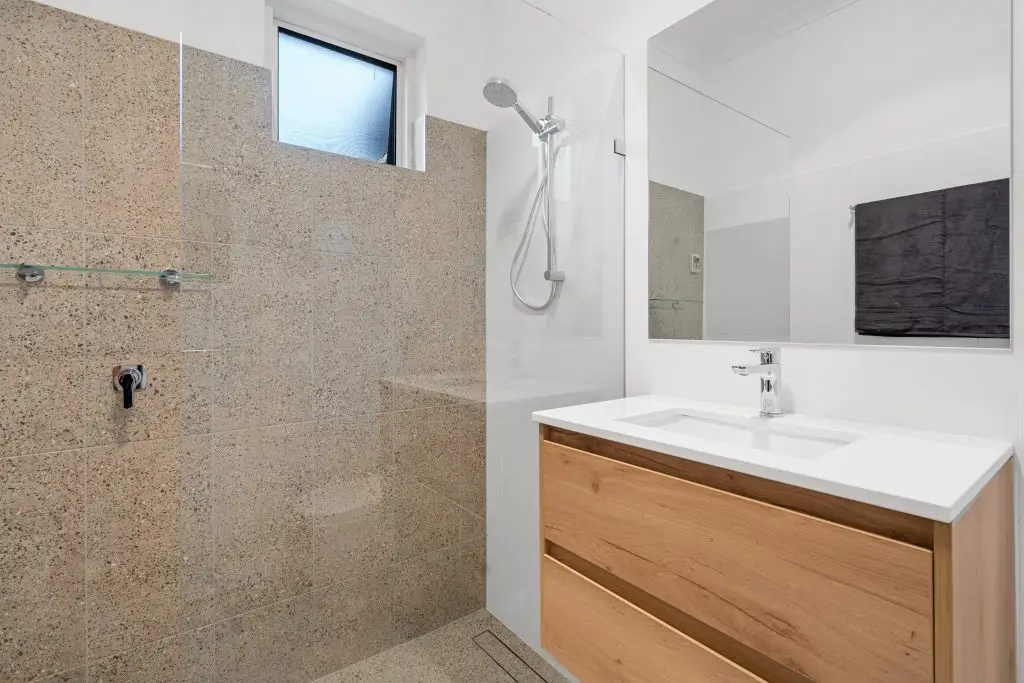
Warm beige and sand-coloured grout can complement natural stone-inspired tiles, cream finishes and timber-look cabinetry.
These shades can help create a softer bathroom design, particularly when paired with warm lighting and natural materials.
For bathrooms featuring earthy colours, beige grout can help maintain a consistent palette.
Dark grey and charcoal grout
Dark grout can create a more dramatic appearance and highlight individual tiles.
It is often used with white tiles to create contrast or paired with darker finishes for a more contemporary design.
Charcoal grout may also help make certain types of everyday dirt less visually obvious, although it can still show soap residue, mineral deposits and other surface build-up.
Black grout
Black grout can be used to create a bold, defined finish.
It may work well with white tiles, monochromatic bathrooms or designs featuring black tapware and accessories.
However, darker grout is not maintenance-free. Depending on the water quality, cleaning products and bathroom conditions, residue and mineral deposits may become visible.
When choosing a grout colour, consider the overall design rather than selecting a shade simply because it is currently popular.
3. Consider the Size, Shape and Pattern of Your Tiles
The tile format and layout can influence how prominent grout lines appear throughout a bathroom.
Smaller tiles generally require more grout joints across a surface, while larger tiles typically create fewer visible lines.
This means the same grout colour can produce a different visual effect depending on the tile dimensions and pattern.
Large format tiles
Large format tiles are popular in contemporary bathroom renovations because they can create a more continuous appearance.
A grout colour that closely matches the tile can help maintain this effect by reducing the visual distinction between individual pieces.
For example, large light grey porcelain tiles paired with a similar grout shade can create a streamlined finish across bathroom walls.
However, the grout joint should still meet the tile manufacturer’s requirements and the specifications of the installation system.
Subway tiles
Subway tiles offer flexibility in terms of layout and colour combinations.
White subway tiles with white grout create a classic, understated finish, while grey or charcoal grout can highlight the traditional brick pattern.
The direction of the tiles can also influence the overall appearance.
Horizontal layouts may create a sense of width, while vertical arrangements can draw attention to wall height.
Mosaic tiles
Mosaic tiles contain many individual pieces, meaning grout plays a significant role in their final appearance.
A matching grout can create a more consistent finish, while contrasting grout can highlight the individual shapes and patterns.
Mosaic tiles are often used in shower floors, decorative niches and feature areas.
When selecting grout for mosaics, consider the tile material, joint dimensions and suitability of the grout for the intended wet-area application.
Patterned tiles
Patterned tiles already contain significant visual detail.
In these situations, a more neutral grout colour may help prevent the finished design from becoming too busy.
The goal is to allow the tile pattern to remain the main feature while ensuring the joints complement the overall appearance.
For Adelaide bathroom renovations, considering grout colour during the tile selection process can help avoid unnecessary changes once installation begins.
4. Understand the Different Types of Grout Available
Choosing a grout colour is important, but the type of grout used is equally significant.
Different grout products have different properties, installation requirements and suitable applications.
The selection should be based on the tile material, joint width, bathroom conditions and manufacturer’s recommendations.
Cement-based grout
Cement-based grout is commonly used in residential tiling projects.
It is available in a range of colours and can be suitable for many wall and floor tile applications.
Some cement-based products require sealing, depending on their formulation. Following the manufacturer’s instructions is important to maintain their performance.
Epoxy grout
Epoxy grout uses a resin-based system and is designed to provide different performance characteristics from traditional cement-based products.
It is generally more resistant to staining and water absorption than standard cement-based grout, although installation requirements can be more demanding.
Epoxy grout may be suitable for certain bathrooms and applications where additional resistance to staining is desired.
However, it is not automatically the right option for every project. Product compatibility, installation conditions and cost should all be considered.
Ready-mixed grout
Some ready-mixed grout products are available for specific tile applications.
Their suitability depends on the manufacturer’s specifications, the intended location and the bathroom conditions.
They should not be assumed to be suitable for every shower, floor or wet-area application.
Choosing the right product
Before selecting a grout, confirm:
- Whether it is suitable for the intended wall or floor application.
- The recommended joint width.
- Compatibility with the selected tile material.
- Whether sealing is required.
- Cleaning and maintenance requirements.
- Available colours and product warranties.
The grout product and colour should be confirmed before installation begins.
It is also important to understand that grout is not a substitute for waterproofing. The wet-area waterproofing system must be correctly designed and installed independently of the tiled finish.
5. Think About Cleaning and Long-Term Maintenance
A bathroom is exposed to moisture, cleaning products, soap residue and everyday use. The grout colour you choose can influence how noticeable some of this build-up becomes.
While no grout colour is completely maintenance-free, certain shades may be more forgiving in particular environments.
Does white grout get dirty?
White grout can show discolouration, dirt and staining more readily than some darker alternatives.
This is particularly relevant around showers, vanities and other frequently used areas.
Regular cleaning and suitable ventilation can help maintain its appearance.
Is darker grout easier to maintain?
Darker grout may make some everyday dirt less noticeable, but it can also show certain types of residue.
For example, soap deposits, mineral build-up and lighter-coloured cleaning residue may be more visible against dark grout.
The maintenance requirements depend on water quality, bathroom use, cleaning routines and the product selected.
Consider the bathroom’s ventilation
Ventilation is an important part of maintaining any bathroom finish.
Bathrooms regularly experience moisture from showers and baths. Without adequate ventilation, condensation can accumulate and contribute to mould growth and deterioration of building materials.
A suitable exhaust system should be selected based on the bathroom’s requirements and installed in accordance with applicable regulations.
Establish a cleaning routine
Follow the grout manufacturer’s cleaning recommendations and use products suitable for the selected grout and tile material.
Avoid assuming that stronger cleaning chemicals will produce better results. Some products may damage grout, sealants or tile finishes.
For bathroom renovations Adelaide homeowners undertake, maintenance should be considered during product selection rather than after the renovation is complete.
Choosing a grout colour you enjoy looking at is important, but understanding how it will perform in everyday conditions is equally valuable.
6. Test Your Grout Colour Before Installation
One of the easiest ways to avoid disappointment is to view your selected grout colour alongside the actual tile before installation.
Grout samples and colour charts are useful starting points, but colours can appear different depending on lighting, surrounding finishes and the tile itself.
A shade that looks ideal in a showroom may appear warmer, cooler or darker once installed in your bathroom.
Before confirming your selection, consider the following.
View samples in natural and artificial light
Lighting can influence how grout colours appear.
If your bathroom has limited natural light, a grout shade may look different from how it appeared in a brightly lit showroom.
Review your samples under lighting conditions similar to those in your home.
Compare samples directly against the tile
Place the grout sample beside the actual tile rather than relying on photographs or digital colour charts.
Look at the overall relationship between the two colours.
Ask yourself whether you want the grout to blend into the tile or create a defined pattern.
Consider surrounding materials
Grout should also work with the vanity, tapware, flooring and wall finishes.
A warm beige grout may complement timber cabinetry and cream tiles, while a cool grey shade may work better with concrete-look finishes and contemporary fixtures.
Confirm the final product
Once you have selected a colour, record the product name, manufacturer and colour reference.
This information can be useful for future repairs or maintenance.
For larger projects, it may also be worthwhile discussing a sample installation with your renovation team before confirming the final selection.
Taking time to test grout colour before installation can help prevent an avoidable design disappointment.
7. Coordinate Grout Colour With the Entire Renovation
Grout should be considered as part of the complete bathroom design rather than an isolated finishing decision.
The most successful bathroom renovations bring together several elements, including tile selection, cabinetry, plumbing fixtures, lighting and waterproofing.
When these decisions are coordinated early, the finished room is more likely to feel balanced and cohesive.
Finalise permanent design decisions first
Before selecting grout, confirm the main elements of the bathroom:
- Overall layout and fixture positions.
- Wall and floor tile selection.
- Tile dimensions and installation pattern.
- Vanity size and cabinetry finish.
- Shower screen design.
- Tapware and accessory finishes.
- Lighting locations.
Once these decisions are established, it becomes easier to choose a grout colour that complements the overall design.
Consider different grout colours in the same bathroom
You do not necessarily need to use the same grout colour throughout the entire bathroom.
For example, a homeowner may choose a matching grout for large wall tiles and a different shade for a decorative feature wall.
However, using multiple grout colours requires careful planning to ensure the finished design remains consistent.
Consider how transitions between different tile surfaces will appear and confirm where each grout colour will be used.
Keep a record of your selections
Record the details of the products used throughout the renovation, including tile references, grout colours, sealants and fixtures.
Keeping this information in one place can make future repairs and maintenance easier.
For bathroom renovations Adelaide homeowners are planning, documenting these decisions also helps ensure that everyone involved in the project is working from the same approved specifications.
Frequently Asked Questions About Bathroom Grout Colour
What is the best grout colour for bathroom tiles?
The best grout colour depends on the tile design and the appearance you want to achieve. Matching grout creates a more seamless finish, while contrasting grout highlights individual tiles and patterns. Consider the bathroom’s lighting, surrounding finishes and maintenance requirements before making a selection.
Should grout be lighter or darker than the tile?
Neither option is automatically better. Lighter grout can create a subtle, understated finish, while darker grout can provide definition and contrast. The right choice depends on the tile colour, layout and overall bathroom design.
What grout colour is easiest to keep clean?
No grout colour is completely maintenance-free. Medium neutral shades may help make some everyday dirt less noticeable, although soap residue and mineral deposits can still appear. The grout product, bathroom ventilation and cleaning routine all influence ongoing maintenance.
Does grout colour fade over time?
Grout appearance can change over time due to cleaning products, staining, moisture, wear and other environmental conditions. Selecting a suitable product and following the manufacturer’s maintenance recommendations can help preserve its appearance.
Can I change my grout colour without replacing the tiles?
In some circumstances, existing grout can be recoloured using suitable grout colourants or coatings. The condition of the existing grout and the product’s compatibility need to be assessed first. If the grout is damaged or deteriorated, replacement may be more appropriate.
Should bathroom walls and floors have the same grout colour?
Not necessarily. Using the same grout colour can create a consistent appearance, while different shades may help distinguish separate surfaces or design features. Consider how the colours work together before finalising the selections.
Is epoxy grout better for bathrooms?
Epoxy grout offers different performance characteristics from traditional cement-based grout, including greater resistance to staining and water absorption. However, suitability depends on the application, product specifications and installation requirements. Discuss the options with your renovation team.
Plan Your Bathroom Renovation with Adelaide Bathroom Renovations
Grout colour may seem like a small detail, but it can have a significant influence on the finished appearance of your bathroom.
From creating a seamless look with matching grout to highlighting decorative tile patterns with contrasting shades, the right selection helps bring the overall design together.
However, a successful bathroom renovation involves much more than choosing attractive finishes. Substrate preparation, waterproofing, plumbing, electrical work, ventilation and product compatibility all contribute to the long-term performance of the room.
At Adelaide Bathroom Renovations (ABR), we provide a coordinated approach to bathroom renovations throughout metropolitan Adelaide.
As the specialist renovation division of Plumfast, our key trades are part of the same group, allowing us to coordinate estimating, design support, plumbing, electrical work, carpentry, tiling, finishing and handover through one team.
Clients also receive access to an online customer portal where scheduled work, documents, invoices and progress photographs can be viewed in one place.
Whether you are planning a complete bathroom renovation, updating an ensuite or refreshing a smaller bathroom, our team can help you consider the practical details and design choices involved.
Visit Adelaide Bathroom Renovations to explore our services and arrange a consultation for your upcoming bathroom renovation.
Need a reliable tradie for your next project? Trade Focus provides property maintenance and electrical services across Adelaide, helping homeowners, property managers and businesses keep their properties safe, functional and well maintained.