
Small bathrooms can present unique design challenges for Adelaide homeowners. Limited floor space, compact layouts, restricted storage and existing plumbing locations can all influence how a renovation is planned. However, the right design decisions can help create a bathroom that feels more spacious, practical and visually cohesive.
Large format tiles have become a popular option for contemporary bathroom renovations. Their larger dimensions can reduce the number of grout lines across walls and floors, creating a cleaner appearance that may help smaller rooms feel less visually busy. Available in a variety of colours, textures and finishes, large format tiles can suit everything from minimalist bathrooms to warm, natural-inspired interiors.
While larger tiles can offer several design advantages, their successful installation requires careful planning. Tile dimensions, substrate preparation, waterproofing, drainage, room proportions and installation techniques all need to be considered before construction begins.
At Adelaide Bathroom Renovations (ABR), we help Adelaide homeowners coordinate bathroom renovations with a focus on practical design, quality workmanship and clear communication. Whether you are updating a compact ensuite or renovating a small family bathroom, understanding how large format tiles work within your space can help you make more informed decisions.
Here are seven expert tips to consider when incorporating large format tiles into a small bathroom renovation.
1. Understand How Large Format Tiles Can Make a Small Bathroom Feel More Spacious
One of the main reasons homeowners consider large format tiles for small bathrooms is their ability to create a more continuous visual appearance.
Traditional smaller tiles often produce a greater number of grout lines across a wall or floor. While this can be an attractive design feature, a high number of contrasting lines may make a compact room appear visually fragmented.
Large format tiles reduce the number of visible joints, helping surfaces appear more consistent. When used thoughtfully, this can create a sense of visual continuity throughout the bathroom.
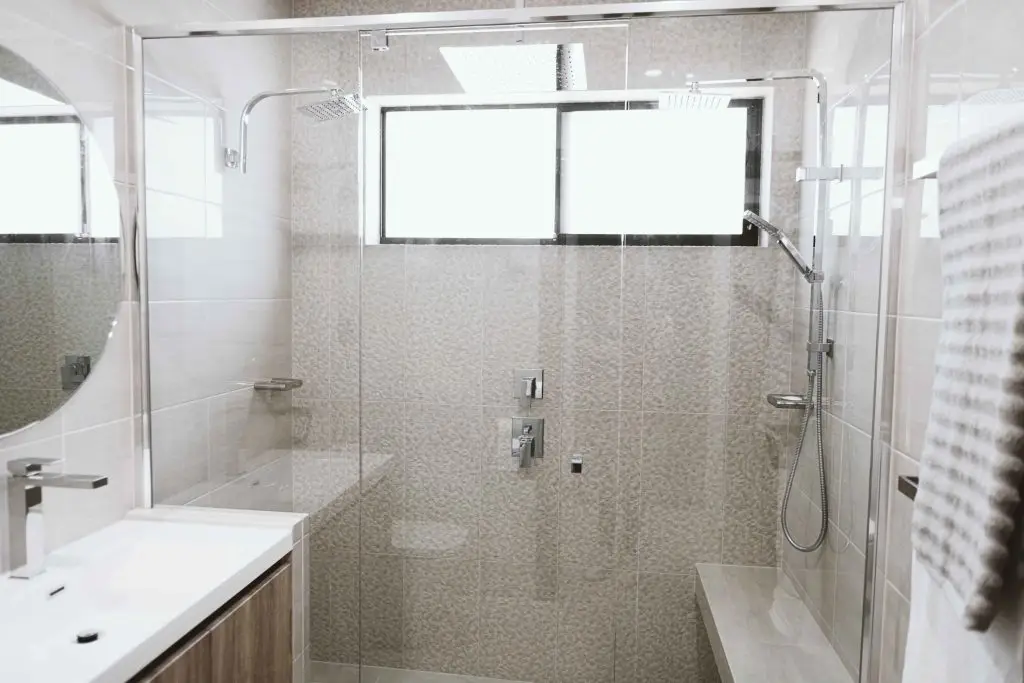
For example, using large format tiles across the main bathroom walls can establish a more streamlined appearance. Extending a similar tile finish into the shower area may also help create a cohesive design.
However, tile size alone does not determine how spacious a bathroom feels. The room’s proportions, lighting, colour palette and fixture placement are equally important.
When selecting large format tiles, consider:
- The dimensions of the bathroom walls and floor.
- Whether the tile pattern complements the room’s proportions.
- How grout lines will align with fixtures and architectural features.
- Whether the selected tile colour works with the lighting.
- How the tile finish interacts with cabinetry, tapware and shower screens.
A compact bathroom may benefit from a consistent palette of light or neutral finishes, although darker tiles can also work effectively when balanced with suitable lighting and other design elements.
The objective is to create a bathroom that feels coordinated rather than overcrowded.
For Adelaide homeowners planning small bathroom renovations, large format tiles can be an effective design consideration when incorporated into a carefully planned layout.
2. Choose the Right Tile Dimensions for Your Bathroom
Large format tiles are available in a range of dimensions, including 600 x 600 mm, 600 x 1200 mm and larger rectangular formats. The most suitable size depends on the bathroom’s dimensions, surface requirements and installation conditions.
A common misconception is that the largest available tile will always be the best option for a small bathroom.
In reality, oversized tiles may require additional cutting around doorways, niches, shower screens, floor wastes and other fixtures. This can affect the finished appearance and increase installation complexity.
Before choosing large format tiles, consider the following.
Wall dimensions
Measure the bathroom walls to determine how the tiles will fit within the available space.
A tile layout should consider the position of corners, windows, vanities and shower screens. Planning the tile pattern before installation can help minimise narrow cuts and awkward transitions.
Floor dimensions
Floor tiles need to accommodate the bathroom’s drainage requirements.
In shower areas, the floor must be appropriately graded towards the waste. Depending on the tile dimensions and shower configuration, larger tiles may require more complex cutting or a different drainage arrangement.
Smaller tile formats may be more suitable for certain shower floors because they can accommodate changes in floor gradient more easily.
Tile thickness and weight
Large format tiles may have different thicknesses and weights depending on their material and intended application.
The substrate and installation system must be suitable for the selected product. Wall installations in particular require careful consideration of the tile’s weight, adhesive requirements and fixing method.
Overall design
Consider whether the selected dimensions complement the room’s proportions.
A rectangular tile installed vertically may help emphasise the height of a wall, while horizontal placement may create a different visual effect.
For large format tiles to work successfully in small bathrooms, the dimensions should be selected based on the room rather than simply choosing a product because it is popular.
3. Select Colours and Finishes That Complement the Space
Colour and finish can have a significant influence on the appearance of a small bathroom.
Large format tiles are available in a wide range of finishes, including stone-inspired designs, concrete-look surfaces, marble-look patterns and understated neutral colours.
The right selection can help establish the desired atmosphere while maintaining a practical design.
Light and neutral colours
Light-coloured large format tiles can reflect available light and create a brighter appearance.
White, beige, warm grey and soft cream finishes are commonly used in contemporary bathrooms. These colours can work particularly well when paired with natural timber cabinetry, simple tapware and minimal decorative elements.
Natural stone-inspired finishes
Stone-look large format tiles can introduce texture and visual interest without requiring the maintenance associated with certain natural stone products.
Marble-look tiles, for example, can create a sophisticated appearance through subtle veining and tonal variation.
When using patterned tiles, consider how the design will continue across multiple surfaces. Selecting tiles with consistent visual characteristics can help create a more cohesive finish.
Matte and polished finishes
Matte tiles can provide a softer appearance and may be suitable for a range of bathroom applications.
Polished tiles can reflect light, although they may also create glare depending on their location and the lighting design.
The suitability of each finish depends on its intended use. Floor tiles should be selected with appropriate slip resistance for the application, particularly in wet areas.
Coordinate your finishes
When incorporating large format tiles, consider how they will work alongside:
- Vanity cabinetry.
- Shower screens.
- Tapware and accessories.
- Bathroom lighting.
- Mirrors.
- Wall niches and storage.
A consistent colour palette can help a small bathroom feel more organised.
Rather than selecting every finish independently, establish the overall design direction first and choose products that complement one another.
4. Prepare the Substrate Before Installing Large Format Tiles
The quality of the substrate is one of the most important factors affecting the finished appearance of large format tiles.
Because larger tiles cover more surface area, unevenness in the underlying substrate can become more noticeable during installation.
A properly prepared surface helps support consistent tile placement and reduces the risk of lippage, where the edges of adjacent tiles sit at different heights.
Before installation, the substrate should be assessed for:
- Surface flatness.
- Structural stability.
- Suitable material compatibility.
- Moisture conditions.
- Existing damage or deterioration.
- Suitability for the selected tile and adhesive system.
Any required preparation should be completed before the tiles are installed.
Depending on the existing bathroom, this may involve correcting uneven surfaces, replacing damaged materials or preparing the substrate to meet the requirements of the selected installation system.
Large format tiles also require suitable adhesives and installation techniques. The adhesive must be compatible with the tile material, substrate and intended application.
For wall installations, the tile’s weight and fixing requirements should be assessed carefully.
In wet areas, substrate preparation must also be coordinated with the waterproofing system. Waterproofing is a critical part of bathroom construction and should be completed by appropriately qualified professionals in accordance with applicable requirements.
Homeowners should avoid assuming that the tile itself provides waterproofing. The underlying wet-area system must be correctly designed and installed.
For bathroom renovations Adelaide homeowners undertake, careful substrate preparation helps establish the foundation for a durable and visually consistent tile installation.
5. Plan Grout Lines, Tile Layout and Shower Drainage
The layout of large format tiles can influence both the appearance and functionality of a small bathroom.
Although larger tiles reduce the number of grout lines, those remaining joints still need to be planned carefully.
A well-considered tile layout can help create visual consistency while reducing unnecessary cuts around fixtures and architectural features.
Plan grout line placement
Grout lines should be considered in relation to the room’s dimensions and design.
For example, aligning grout joints with vanity edges, shower screens or other features can help create a more organised appearance.
The appropriate grout joint width depends on the tile product, dimensional tolerances and manufacturer’s installation requirements.
Large format tiles should not automatically be installed with extremely narrow grout joints. Suitable spacing is important for accommodating product tolerances and the installation system.
Consider the shower floor
Shower drainage is particularly important when using large format tiles.
The floor needs to be graded appropriately towards the waste to prevent water from pooling.
Depending on the shower design, a linear drain may provide greater flexibility for using larger tiles in certain areas. However, the suitability of this arrangement depends on the bathroom layout, drainage requirements and construction details.
Smaller tiles may still be preferable in some shower floor configurations.
Plan niches and fixtures
If the bathroom includes recessed shower niches, consider how the tile layout will interact with their dimensions.
Planning the niche around the tile format can help reduce unnecessary cuts and create a cleaner finished appearance.
The same principle applies to vanity splashbacks, mirrors and shower screens.
When using large format tiles in a small bathroom, early coordination between the design and installation stages can help avoid awkward detailing.
6. Consider Lighting, Storage and Bathroom Fixtures
Large format tiles can contribute to a streamlined bathroom design but the room’s overall functionality still depends on how its fixtures and features are arranged.
Lighting, storage and fixture placement should be considered alongside the tile selection.
Bathroom lighting
Lighting can influence how large format tiles appear.
Natural light may highlight the texture and colour variation of a tile, while artificial lighting can create different visual effects depending on its position and colour temperature.
A combination of general lighting and task lighting around the vanity can help create a functional bathroom environment.
When selecting large format tiles with textured or patterned finishes, consider how lighting may emphasise their characteristics.
Vanity selection
A compact bathroom may benefit from a vanity that provides sufficient storage without restricting movement.
Wall-mounted vanities can create a more open visual appearance, while drawers may provide practical storage for everyday items.
The vanity dimensions should be coordinated with the tile layout to avoid unnecessary cutting or awkward transitions.
Shower screens
Frameless or minimal shower screens may help maintain a sense of visual openness in smaller bathrooms.
The shower screen should be selected based on the available space, shower configuration and access requirements.
Storage
Storage should be incorporated into the design rather than added after the main fixtures have been selected.
Recessed niches, mirrored cabinets and practical vanity storage can help reduce clutter.
For small bathroom renovations, coordinating large format tiles with suitable fixtures and storage can create a cohesive space that feels both attractive and functional.
7. Work with an Experienced Bathroom Renovation Team
Installing large format tiles requires careful coordination between product selection, substrate preparation, waterproofing and installation.
The complexity of the work depends on the tile dimensions, material, surface conditions and bathroom layout.
Working with an experienced renovation team can help ensure that the different construction stages are coordinated appropriately.
Before commencing your renovation, discuss:
- Whether the selected tile is suitable for the proposed application.
- How the substrate will be prepared.
- Which adhesive and installation system will be used.
- How waterproofing will be coordinated with tiling.
- Whether the proposed tile layout is practical.
- How shower drainage will accommodate the selected tiles.
- What maintenance requirements apply to the finished surfaces.
It is also important to confirm product availability and delivery timeframes before construction begins.
Large format tiles may require additional handling and installation considerations compared with smaller tile formats. Confirming these requirements early can help establish a realistic construction schedule.
Adelaide Bathroom Renovations coordinates bathroom renovation projects throughout metropolitan Adelaide, helping homeowners bring their renovation plans together through a managed process.
Whether you are updating a compact ensuite or undertaking a complete bathroom renovation, our team can help you explore suitable design options and coordinate the required trades.
Frequently Asked Questions About Large Format Tiles in Small Bathrooms
Are large format tiles suitable for small bathrooms?
Yes. Large format tiles can be suitable for small bathrooms when the tile dimensions, layout and installation requirements are carefully considered. Their reduced number of grout lines can create a more continuous visual appearance. However, the suitability of the tiles depends on the room’s dimensions, drainage requirements and substrate conditions.
Do large format tiles make a small bathroom look bigger?
Large format tiles may help a small bathroom feel more spacious by reducing the number of visible grout lines. Light colours, consistent finishes and thoughtful lighting can also contribute to a more open appearance. However, the overall effect depends on the bathroom’s layout, proportions and design.
Are large format tiles harder to install?
Large format tiles can require additional preparation, handling and installation considerations. The substrate must be suitable for the tile dimensions, and the installation system must meet the manufacturer’s requirements. Shower floors and areas with complex drainage may also require different tile formats or installation approaches.
Are large format tiles suitable for shower floors?
Large format tiles may be suitable for certain shower floor designs, but the required floor gradient and drainage arrangement must be considered. Smaller tiles may be more practical for some shower configurations. The appropriate tile selection depends on the design, installation system and product specifications.
Do large format tiles require less grout?
Large format tiles generally require fewer grout joints across a given surface area compared with smaller tiles. However, grout is still required in accordance with the tile manufacturer’s installation requirements. The reduced number of joints does not eliminate the need for appropriate cleaning and maintenance.
What is the best colour for large format tiles in a small bathroom?
Light and neutral colours can help create a brighter appearance, particularly in bathrooms with limited natural light. However, the best colour depends on the desired design and how the tiles coordinate with the bathroom’s fixtures, cabinetry and lighting.
Plan Your Small Bathroom Renovation with Adelaide Bathroom Renovations
Large format tiles can be an effective design choice for small bathrooms when their dimensions, finishes and installation requirements are carefully considered.
From selecting suitable products and preparing the substrate to coordinating waterproofing, drainage and tile placement, each stage contributes to the finished result.
At Adelaide Bathroom Renovations (ABR), we provide a coordinated approach to bathroom renovations, helping homeowners plan their projects with practical design considerations and clear communication.
From the initial site measure and proposal through construction and handover, our team works to coordinate the renovation process.
Our online customer portal provides access to schedules, documentation, invoices and progress photographs, helping you stay informed throughout your project.
ABR was established as Plumfast’s specialist renovation division, allowing customers to organise their bathroom renovation through one Adelaide trade group.
Whether you are considering large format tiles for a compact ensuite, a small family bathroom or a complete bathroom renovation, our team can help you explore suitable options for your property.
Visit Adelaide Bathroom Renovations to learn more about our services and arrange a consultation for your upcoming renovation.
Need a reliable tradie for your next project? Trade Focus provides property maintenance and electrical services across Adelaide, helping homeowners, property managers and businesses keep their properties safe, functional and well maintained.