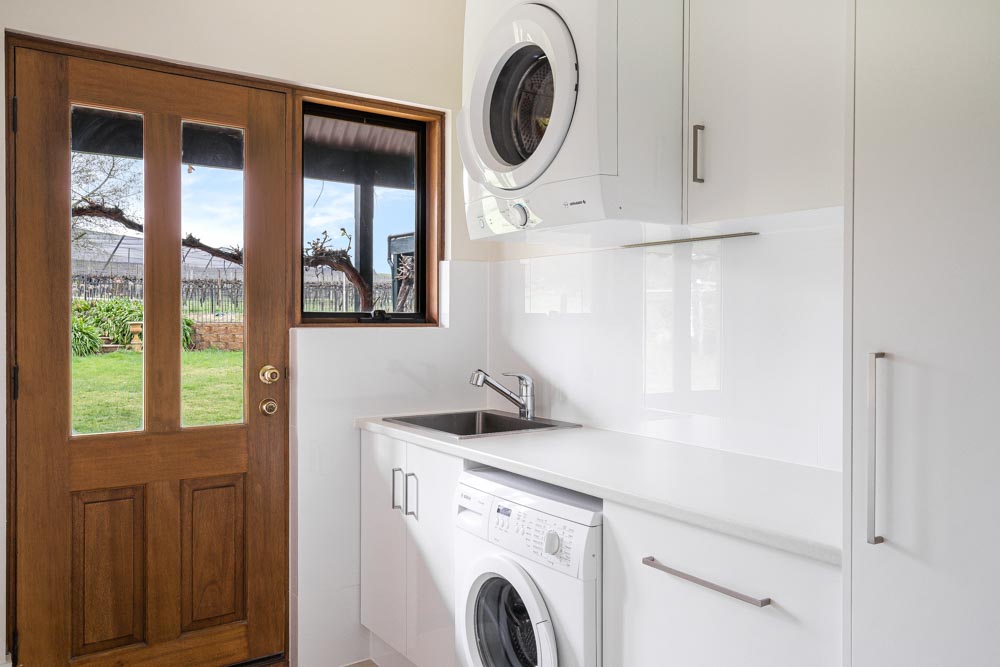
A well designed laundry can make everyday household tasks easier, more organised and more enjoyable. If you have a compact laundry tucked away in a corner or a dedicated utility room, a thoughtful laundry renovation can help maximise storage, improve functionality and create a space that complements the rest of your home.
Many Adelaide homeowners focus on kitchens and bathrooms when upgrading their properties, but the laundry deserves the same attention to detail. Poor storage, limited bench space, awkward appliance placement and insufficient ventilation can make everyday household tasks unnecessarily frustrating.
Planning ahead is essential to achieving a practical result. From choosing the right cabinetry to coordinating plumbing and electrical services, every decision contributes to the finished space.
At Adelaide Bathroom Renovations, the focus is on helping homeowners create functional, attractive spaces through coordinated renovation services and professional project management.
Here are seven important considerations to help you plan a laundry that works for your household.
[Insert laundry renovation project photograph here]
Image alt text: Laundry renovation with modern cabinetry, practical storage and functional benchtop.
1. Plan Your Laundry Renovation Around Your Household
Before choosing colours, cabinetry or finishes, consider how your family uses the laundry every day.
A successful laundry renovation starts with understanding your household’s routines and identifying the activities that need to happen in the room.
For example, some households need additional bench space for folding clothes, while others require dedicated storage for cleaning products, ironing equipment and laundry baskets.
Consider the following:
- How many washing machines and dryers will the room accommodate?
- Do you need space for sorting and folding clothes?
- Where will you store detergents and cleaning equipment?
- Would a hanging rail or drying rack be useful?
- Do you need additional storage for towels and household linen?
- Is there enough room to move comfortably between appliances?
Creating a list of requirements before construction begins helps establish priorities and prevents unnecessary design changes later.
It is also important to consider how the laundry connects with neighbouring rooms. If it shares space with a bathroom, kitchen or outdoor access area, the layout should support convenient movement throughout the home.
2. Choose Storage Solutions That Maximise Space
Storage is one of the most important elements of a functional laundry.
Without suitable cabinetry, detergents, cleaning products, baskets and household supplies can quickly occupy valuable bench space.
A carefully planned laundry renovation can introduce storage solutions that keep everyday essentials accessible while maintaining a clean and organised appearance.
Consider incorporating:
Overhead cabinets: These provide additional storage without taking up valuable floor space. They are useful for detergents, cleaning supplies and items that are not needed every day.
Under-bench cupboards: These can accommodate laundry baskets, cleaning equipment and larger household products.
Pull-out hampers: Separate hampers make sorting clothes easier and help keep laundry off the floor.
Tall storage cabinets: These are particularly useful for storing ironing boards, brooms, mops and other cleaning equipment.
Open shelving: Shelves provide convenient access to frequently used products while creating opportunities to introduce decorative elements.
The best storage arrangement depends on your available floor space, appliance dimensions and household requirements.
For smaller properties, thoughtful space planning can make compact areas more functional. This approach is equally useful when considering small bathroom renovation solutions.
3. Coordinate Plumbing and Electrical Services Before Installing Cabinetry
Plumbing and electrical planning should happen before cabinetry and finishes are installed.
Washing machines, dryers, laundry tubs and other fixtures all have specific service requirements. If these are not considered early, homeowners may encounter additional costs, unnecessary modifications or delays during construction.
During the planning stage, confirm the location of:
- Washing machine water connections.
- Wastewater outlets and drainage.
- Electrical outlets for appliances.
- Dedicated power requirements where applicable.
- Lighting and ventilation systems.
- Hot and cold water connections for laundry fixtures.
Appliance specifications should also be checked before cabinetry is manufactured. This helps ensure there is enough clearance for appliance doors, hoses, ventilation and future maintenance.
Relocating plumbing or electrical services may increase renovation costs, so retaining the existing layout can be a practical option when it suits the new design.
For guidance on building and renovation requirements in South Australia, homeowners can consult the SA Government’s building and development information.
Good coordination between trades is essential to achieving a smooth installation and avoiding problems once the room is finished.
4. Select Durable Materials and Finishes
Laundry rooms experience regular moisture, temperature changes and frequent cleaning. Choosing suitable materials is therefore essential.
A visually appealing design should also withstand everyday household use.
When planning your laundry renovation, consider the following materials and finishes:
Benchtops: Choose durable, easy-to-clean surfaces that can withstand regular use. Consider how much space you need for folding clothes and organising laundry products.
Cabinetry: Moisture-resistant cabinetry materials and suitable edge finishes can help protect storage units from everyday exposure to humidity and splashes.
Flooring: Select durable, easy-to-maintain flooring with appropriate slip resistance for wet areas.
Splashbacks: Tiled or other suitable splashback surfaces help protect walls behind laundry tubs and washing machines.
Tapware and sinks: Choose fixtures that are practical, easy to clean and appropriate for your household’s needs.
Neutral colours, simple finishes and quality fittings can create a timeless appearance without making the laundry feel overly decorative.
Homeowners interested in creating more environmentally conscious spaces can also explore YourHome, the Australian Government’s guide to sustainable homes. It provides information about materials, energy efficiency, water use and practical ways to improve household spaces.
For homeowners considering a broader property upgrade, coordinating the laundry with bathroom renovation work can also help create a consistent design throughout the home.
5. Make the Most of Bench Space and Appliance Placement
A functional laundry needs more than sufficient storage. The placement of appliances and available work surfaces can significantly affect how comfortable the room is to use.
A dedicated benchtop provides a convenient area for folding clothes, sorting washing and preparing items for storage.
If your laundry is compact, consider installing a benchtop above front-loading appliances, provided the manufacturer’s installation and clearance requirements are met.
Other practical design considerations include:
- Positioning the washing machine close to the laundry tub.
- Providing adequate clearance for appliance doors.
- Keeping frequently used products within easy reach.
- Installing a hanging rail for clothes that need air-drying.
- Considering a stacked washer and dryer arrangement where suitable.
- Allowing sufficient space to open cupboards and drawers.
The goal is to create a layout that reduces unnecessary movement and makes household routines easier.
Before finalising the design, walk through your typical laundry routine and consider where each activity will take place. This simple exercise can reveal layout issues before construction begins.
6. Improve Lighting and Ventilation
Lighting and ventilation are sometimes overlooked during a laundry renovation, but both contribute significantly to the comfort and usability of the room.
Good lighting makes it easier to sort clothing, identify stains, read product labels and complete everyday tasks.
Consider combining general ceiling lighting with task lighting above the benchtop or inside frequently used work areas.
Ventilation is equally important because washing machines, dryers and wet laundry can introduce moisture into the room.
Insufficient ventilation may contribute to condensation, unpleasant odours and mould growth.
Depending on the room’s layout, suitable options may include:
- Mechanical exhaust ventilation.
- Windows that provide natural airflow.
- Appropriate dryer ventilation arrangements.
- Moisture-resistant materials.
- Adequate spacing around appliances.
Ventilation requirements should be assessed alongside appliance specifications and applicable building requirements.
A comfortable laundry is one that remains practical, well-lit and properly ventilated throughout the year.
7. Finalise Your Laundry Renovation Plans Before Construction
One of the most effective ways to reduce unnecessary renovation complications is to finalise important decisions before demolition begins.
Changing cabinetry dimensions, appliance locations or material selections during construction can result in additional costs and delays.
Before approving your renovation, make sure you have considered:
- Final appliance dimensions and specifications.
- Cabinetry measurements and storage requirements.
- Benchtop and splashback selections.
- Plumbing and electrical locations.
- Flooring and wall finishes.
- Lighting and ventilation requirements.
- Construction scope and project schedule.
It is also worth allowing a contingency in your renovation budget for unexpected issues, particularly if the existing laundry has ageing plumbing, damaged flooring or moisture-related problems.
A detailed renovation plan gives the trades involved a consistent reference point and helps keep the project organised.
Laundry Renovation Checklist
Use this checklist when preparing for your project:
- Measure the available laundry space.
- Identify household storage requirements.
- Confirm washing machine and dryer dimensions.
- Plan benchtop and laundry tub placement.
- Coordinate plumbing and electrical services.
- Select durable cabinetry and finishes.
- Consider lighting and ventilation.
- Confirm the renovation scope and inclusions.
- Review the project schedule and budget.
- Arrange a professional consultation.
Completing these steps before construction can help minimise avoidable changes and create a more organised renovation experience.
Why Choose Adelaide Bathroom Renovations for Your Project?
Choosing the right renovation specialist is an important part of achieving a successful result.
A renovation involves multiple trades, materials, measurements and installation stages. Without proper coordination, homeowners may find themselves managing different contractors and trying to resolve scheduling issues independently.
Adelaide Bathroom Renovations was established as Plumfast’s specialist renovation division, giving customers access to a coordinated renovation service through one Adelaide trade group.
The focus is on providing homeowners with a more organised experience, from the initial consultation and proposal through construction and final handover.
Key aspects of the renovation approach include:
- End-to-end project coordination: A managed approach to organising the different stages of your renovation.
- Clear communication: A dedicated point of contact to help keep homeowners informed.
- Project documentation: Access to schedules, invoices, progress photographs and other project information through the online customer portal.
- Coordinated trades: Planning the work to support a more consistent construction process.
If you are considering a laundry renovation or planning a combined bathroom and laundry renovation, professional coordination can help simplify the process.
Visit Adelaide Bathroom Renovations to explore renovation services and discuss your requirements.
Frequently Asked Questions About Laundry Renovations
1. How much does a laundry renovation cost?
The cost depends on the room’s size, existing condition, cabinetry, benchtops, fixtures and whether plumbing or electrical services need to be relocated. The best way to establish a realistic budget is to request an itemised quotation based on your property’s requirements.
2. How long does a laundry renovation take?
The timeframe varies depending on the renovation scope, materials, availability of trades and any structural or service changes. A straightforward renovation may take less time than a project involving extensive plumbing, electrical or layout modifications. Your renovation provider should discuss the expected schedule before work begins.
3. What is the best way to maximise laundry storage?
Use a combination of overhead cabinets, under-bench cupboards, pull-out hampers and tall storage units. Plan storage around your appliances and household routines rather than filling every available wall with cabinetry.
4. Can I renovate a laundry without moving the plumbing?
Yes. Retaining the existing plumbing locations can help simplify the project and reduce additional work. However, the existing layout should still be assessed to confirm that it supports your preferred cabinetry, appliances and laundry tub arrangement.
5. What materials are best for a laundry?
Choose durable, moisture resistant cabinetry, easy to clean benchtops and suitable flooring. The materials should withstand regular cleaning, humidity and everyday use while complementing the overall design of your home.
6. Can I combine a bathroom and laundry renovation?
Yes. Combining the projects can provide an opportunity to improve the layout, coordinate plumbing and electrical work, and create a consistent design. The feasibility depends on the available space and existing services.
7. How do I get a laundry renovation quote in Adelaide?
Start by discussing your requirements with a laundry renovation specialist. Provide details about your existing layout, preferred finishes, appliances and budget. A site assessment and clearly defined scope of work can help establish a more accurate quotation.
Plan Your Laundry Renovation with Adelaide Bathroom Renovations
Your laundry should be more than a space for washing clothes. With the right design, it can become an organised, functional and attractive part of your home.
A successful laundry renovation begins with practical planning, suitable materials and careful coordination of every construction detail.
Ifyou need additional storage, improved bench space or a complete laundry transformation, Adelaide Bathroom Renovations can help you explore the possibilities for your property.
Visit Adelaide Bathroom Renovations to discuss your laundry renovation and arrange a consultation.
Make your next laundry renovation a step towards a more functional and comfortable home.