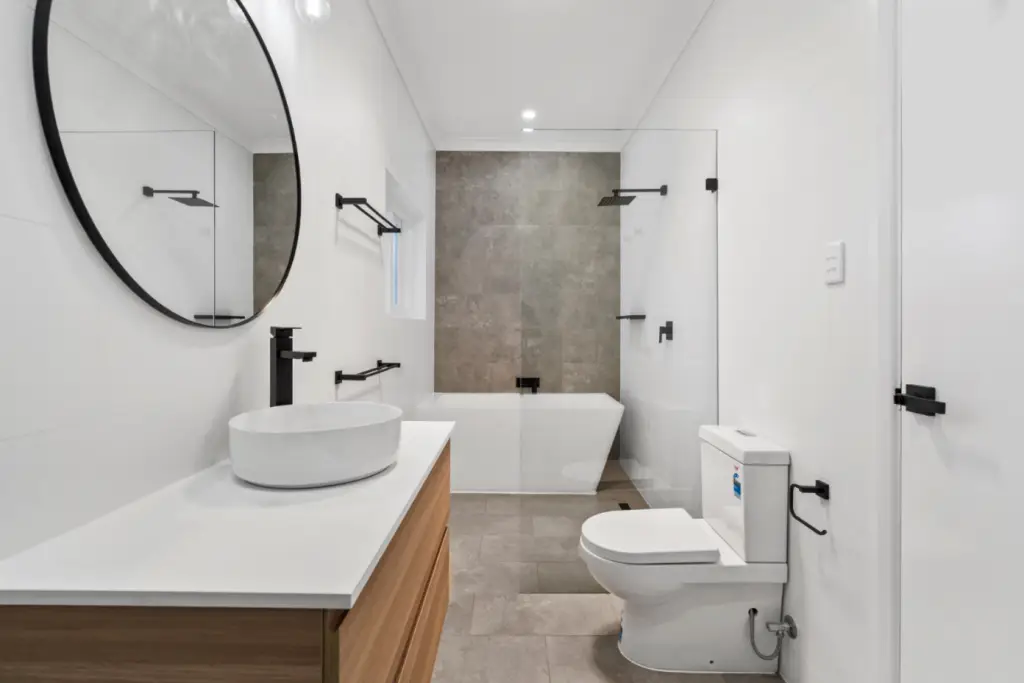
Planning home renovations involves much more than choosing tiles, tapware and cabinetry. A successful result depends on a clear scope, realistic product selections and a construction sequence that protects the parts of a room you cannot see once the work is complete. When renovating a bathroom, ensuite or laundry, coordinating waterproofing, plumbing, electrical work and finishes is essential for creating a functional space that performs well over time.
For homeowners planning home renovations, the most important decisions often happen before construction begins. Understanding the existing space, confirming the location of services, checking product specifications and coordinating trades can help reduce delays and avoid unnecessary changes during the project.
Wet areas require particular attention because several trades contribute to the finished result. Plumbing, electrical work, waterproofing, tiling, cabinetry and ventilation must all work together. If one stage is overlooked, it can affect the work that follows.
This guide explains how to approach these technical considerations, which decisions are best made early and how a coordinated renovation process can help homeowners feel more confident throughout the project.
The hidden work determines long-term performance
The finished appearance of a bathroom is important, but the work beneath the surface plays a major role in its long-term performance. During home renovations, it is easy to focus on the visible details, such as the colour of the tiles, the style of the vanity or the finish of the tapware. However, the preparation and installation work behind those features deserves just as much attention.
Substrates must be stable, services must be correctly positioned and waterproofing must be installed according to the relevant requirements and product specifications. Corners, penetrations, junctions, wastes and changes in material all need careful consideration. These details help create a complete wet-area system rather than a collection of separate components.
For example, a shower can look beautifully finished while concealing problems with preparation, drainage or waterproofing. Identifying an issue after tiling and fixtures have been installed may mean removing completed work to access the affected area. Careful planning and appropriate inspections can help reduce the likelihood of this happening.
A coordinated approach to home renovations gives each trade the information and access needed to complete its work in the correct order. It also helps ensure that important stages are not covered before required checks, testing or documentation have been completed.
Homeowners should ask how the relevant work will be documented and which inspections or certificates apply to their project. Requirements can vary depending on the work involved, so the responsible tradespeople should confirm the applicable standards and obligations.
Products must suit the installation
Choosing products is often one of the most enjoyable parts of home renovations, but appearance should not be the only consideration. A product may suit the design perfectly while being unsuitable for the existing services, available space or planned installation method.
Before ordering fixtures and fittings, confirm their dimensions, connection requirements, mounting method and compatibility with the planned layout. This is particularly important for mixers, in-wall toilet systems, vanities, shower screens, wastes and accessories. Electrical products also need to suit their intended location and installation requirements.
For example, selecting a wall-mounted mixer may affect plumbing positions and the wall structure. Choosing a particular vanity can influence the location of plumbing connections, available storage and the position of nearby electrical fittings. A shower screen may require specific clearances and fixing details.
These decisions should be checked before the relevant construction work begins. Making a change after plumbing rough-in, waterproofing or tiling has been completed can create additional work and may affect the project schedule.
When planning home renovations, ask your renovation team to review the technical information for selected products before finalising the order. Confirm that products are available within the expected timeframe and that installation instructions have been considered. If an item becomes unavailable, check the replacement carefully rather than assuming a similar-looking product will fit.
It is also worth considering cleaning requirements, replacement parts and warranty support. Products that are easy to maintain and have accessible replacement components can be more practical over the long term.
Plan maintenance from the beginning
A well-designed room should be easy to maintain, not simply attractive when it is new. Maintenance should therefore be considered early in home renovations, particularly in rooms exposed to regular moisture, heat and daily use.
Think about how seals, tap cartridges, exhaust fans, lights and other serviceable components will be accessed in the future. Avoid creating unnecessary obstacles around items that may need inspection, adjustment or replacement. Ask the relevant tradespeople how components will be serviced and whether any access requirements need to be incorporated into the design.
Ventilation is another important consideration. Bathrooms and laundries generate moisture, and appropriate ventilation can help manage humidity and reduce condensation. Confirm that the selected exhaust system is suitable for the space and that its installation meets applicable requirements.
Material selection also affects maintenance. Tile finishes, grout colours, tapware finishes, benchtop materials and shower screens can have different cleaning requirements. Consider how much ongoing care you are comfortable with before making final selections.
For practical home renovations, keep product manuals, warranty details, model numbers and maintenance instructions together after handover. This information can make it easier to identify replacement parts or contact a supplier if an issue arises.
Regular cleaning and prompt attention to leaking fittings, damaged seals or ventilation problems can also help protect the finished space. While no product is maintenance-free, informed choices and sensible upkeep can help preserve the appearance and function of the room.
Technical questions to confirm before construction
A checklist can help homeowners understand which technical details need attention before work progresses. The exact requirements will depend on the project, but the following questions provide a useful starting point.
- Substrates and falls: Have the relevant surfaces been assessed and prepared appropriately? Are floor falls and drainage arrangements suitable for the design?
- Service penetrations: Have plumbing and electrical positions been coordinated with the planned waterproofing and finishes?
- Product requirements: Have the installation instructions, clearances and compatibility of fixtures and fittings been checked?
- Waterproofing: Have the relevant preparation, installation and inspection requirements been confirmed with the responsible professional?
- Testing and documentation: Which tests, certificates or inspections are required, and who is responsible for providing them?
- Access for maintenance: Can serviceable components be reached without unnecessary disruption?
- Handover records: Will product information, warranties and relevant project documentation be provided at completion?
These questions help bring clarity to home renovations where several trades need to work in sequence. They also encourage homeowners to discuss responsibilities before construction begins rather than waiting until an issue arises.
Not every project requires the same checks, and this list is not a substitute for professional advice or applicable compliance requirements. Your renovation team and licensed tradespeople should confirm the specific requirements for the work being undertaken.
Make important decisions before work is covered
Some renovation decisions have a much greater effect on the construction process than others. Moving a towel rail may be relatively straightforward, depending on the wall and fixing method. Moving a floor waste, changing a shower layout or relocating major services can have consequences for several stages of the project.
During home renovations, these interconnected decisions should be reviewed before work begins. A new waste position, for example, may affect drainage connections, floor structure, falls, waterproofing and tile set-out. Changing a vanity can influence plumbing connections, electrical positions, storage and the location of mirrors or lighting.
Recording technical decisions helps ensure that everyone involved is working from the same information. Keep approved product specifications, service locations, measurements and relevant installation details accessible to the trades who need them.
If a detail changes during construction, consider the effect on adjoining work before approving the change. A seemingly small adjustment can have consequences for materials already ordered, work already completed or the sequence of trades.
Photographs taken during preparation, rough-in and waterproofing can also provide a useful record. They may help identify where services, supports and other concealed elements are located once the room is finished. However, photographs do not replace required inspections, certificates or other compliance documentation.
At handover, keep project photographs alongside warranties, product manuals, colour information and relevant certificates. An organised record can make future repairs and maintenance more straightforward.
Coordinate trades in the right sequence
Trade coordination is one of the most important parts of a successful renovation. Each stage depends on the work completed before it, and delays or changes can affect several people at once.
A bathroom project may involve demolition, plumbing and electrical rough-in, substrate preparation, waterproofing, tiling, cabinetry, fixtures, fittings and final testing. The precise sequence will vary according to the design and the work required, but the key is to identify dependencies before the schedule is finalised.
For home renovations involving wet areas, plumbing and electrical positions should be confirmed against the approved layout before walls and floors are closed up. Waterproofing must be coordinated with the substrate, penetrations and relevant installation requirements. Tiling and final fixture installation then need to follow the appropriate preparation, curing and inspection stages.
If the trades are not working from consistent plans, the risk of mistakes increases. A plumber may position a connection based on an earlier vanity selection, while the final product requires a different location. An electrician may install a fitting before the mirror dimensions have been confirmed. These issues can lead to avoidable adjustments.
A coordinated schedule should identify the work stages, expected timing, product deliveries and decisions that must be made before each stage can proceed. It should also allow for appropriate drying, curing, testing and inspection requirements rather than relying on an overly optimistic timeline.
Homeowners should understand that construction schedules can change when hidden conditions are discovered or products are delayed. Clear communication helps the team explain the issue, discuss options and determine how the change affects the remaining work.
Keep communication clear throughout the project
Good communication makes home renovations easier to manage, particularly when several trades need to coordinate their work. Before construction begins, confirm who your main point of contact will be, how decisions will be approved and where project information will be stored.
Written records are particularly useful when discussing selections, variations, changes to the scope or revised timeframes. A conversation can help resolve a question quickly, but documenting the agreed outcome reduces the risk of different people remembering the decision differently.
Ask how updates will be provided and how quickly decisions may be needed. Some choices can be made well in advance, while others need to be confirmed before a particular trade arrives. Knowing these deadlines helps homeowners prepare without feeling pressured to make every decision at once.
During home renovations, unexpected issues may arise when demolition reveals concealed services, damaged materials or conditions that were not visible during the initial assessment. The important thing is to understand the issue, the proposed solution, any cost implications and the effect on the schedule before authorising additional work.
A clear communication process gives homeowners a better understanding of what is happening and what is required from them. It also supports more efficient coordination between the people responsible for delivering the project.
Plan for disruption at home
Renovating a bathroom, ensuite or laundry can affect everyday routines, particularly when the household has limited alternative facilities. Thinking about disruption before construction begins can make the experience easier to manage.
Before starting home renovations, establish which areas will be unavailable and for how long, while recognising that actual timeframes may change. If the only bathroom is being renovated, discuss temporary arrangements with your renovation team. If a laundry is affected, consider how you will manage washing and drying during the relevant stages.
Families may also need to plan safe access around the work area. Tools, materials, dust and open service areas can present hazards, so construction zones should be kept separate from children and pets. Confirm the arrangements for access, deliveries, rubbish removal and daily site security.
Product deliveries should be coordinated with the available storage space and the construction schedule. Ordering too early can create storage problems, while ordering too late may delay the work. Confirm delivery dates with suppliers and check that key items will be available when needed.
These practical details may seem less exciting than choosing finishes, but they are an important part of planning home renovations realistically. A project that accounts for household routines and access requirements is easier to prepare for than one that focuses only on the finished design.
Balance the budget with your priorities
A clear budget helps guide decisions throughout a renovation. Before approving a proposal, understand the scope of work, what is included, which items are allowances and what may incur additional costs.
For home renovations, it is helpful to distinguish between essential work, preferred upgrades and optional extras. Essential work may include addressing existing problems or completing necessary preparation. Preferred upgrades might include improved storage or a different fixture, while optional extras could involve decorative changes that are not critical to the function of the room.
An agreed priority list allows your consultant or renovation team to explain where an adjustment may add value and where the existing arrangement could remain. For example, retaining the current plumbing layout may reduce the amount of service relocation required, depending on the condition of the existing installation and the design.
Before finalising the proposal, identify the three outcomes that matter most to your household. These might include easier cleaning, more storage, a safer shower, a more accessible layout or a clearly defined budget. Use these priorities when different choices compete.
It is also sensible to discuss how variations will be quoted and approved. If unexpected work is required, you should understand the proposed change and its cost implications before proceeding. A documented process helps everyone understand what has been agreed.
Choose a renovation team that values coordination
When comparing bathroom renovation specialists, homeowners may encounter similar-looking offers with very different approaches to project management. Looking beyond the headline price can help you understand what is actually being provided.
Ask how the scope will be documented, who will coordinate the trades and how questions will be handled throughout the project. Find out whether product selections are checked before installation and how changes are communicated. It is also useful to understand what project records and handover information will be supplied.
Homeowners searching for bathroom repairs Adelaide may also be considering whether a local renovation provider can manage a larger upgrade. The right solution depends on the condition of the existing space and the work required. A repair may be suitable for an isolated issue, while a broader renovation may be more appropriate when multiple elements need to be replaced or reconfigured.
For home renovations involving several trades, a central point of contact can reduce the burden of coordinating different appointments and decisions independently. However, responsibilities should still be clearly explained, including which licensed professionals undertake particular work and who supplies relevant documentation.
Review the proposed scope carefully and ask questions about anything that is unclear. Understanding inclusions, exclusions, product allowances, timeframes and responsibilities before construction starts can help establish realistic expectations.
How ABR can help
Adelaide Bathroom Renovations (ABR) services homeowners throughout metropolitan Adelaide and can help plan bathroom, ensuite, laundry and separate toilet renovations. ABR combines a customer-focused renovation process with Plumfast’s established trade resources, helping coordinate the main work stages through one group.
For home renovations, having a central contact can make it easier to ask questions, confirm decisions and access project information. Rather than leaving homeowners to manage every stage independently, ABR provides a coordinated process designed to help keep the relevant work and communication organised.
Customer portal access gives each customer a convenient view of scheduling information, project records, photographs and invoices. Having these details available in one place can help homeowners follow progress and keep important information together for future reference.
Every project has its own requirements, so the planning process begins with understanding the space, the proposed scope and the outcomes that matter to the household. Product selections, technical requirements and the sequence of work can then be considered in the context of the project.
If you are planning home renovations in Adelaide and want to discuss a bathroom, ensuite, laundry or separate toilet, ABR can help you understand the process and the practical considerations involved.
Successful wet area renovations depend on more than attractive finishes. Careful preparation, suitable product selections, appropriate waterproofing, correctly coordinated services and clear communication all contribute to a room that functions well.
Planning home renovations with these details in mind helps homeowners ask informed questions and understand how individual decisions affect the wider project. By confirming technical requirements early, coordinating trades and maintaining clear records, you can reduce avoidable uncertainty and make the process easier to manage.
Before construction begins, make sure you understand the agreed scope, the key product selections, the expected sequence of work and the process for approving changes. Keep relevant project documents organised and ask your renovation team to clarify any requirements you do not understand.
With a considered plan and a coordinated team, home renovations in your bathroom, ensuite or laundry can be designed around your household’s needs while giving the behind the scenes work the attention it deserves.
Explore our completed home renovations projects to see examples of the work and gather inspiration for your own space.
Need a reliable tradie for your next project? Trade Focus provides property maintenance and electrical services across Adelaide, helping homeowners, property managers and businesses keep their properties safe, functional and well maintained.