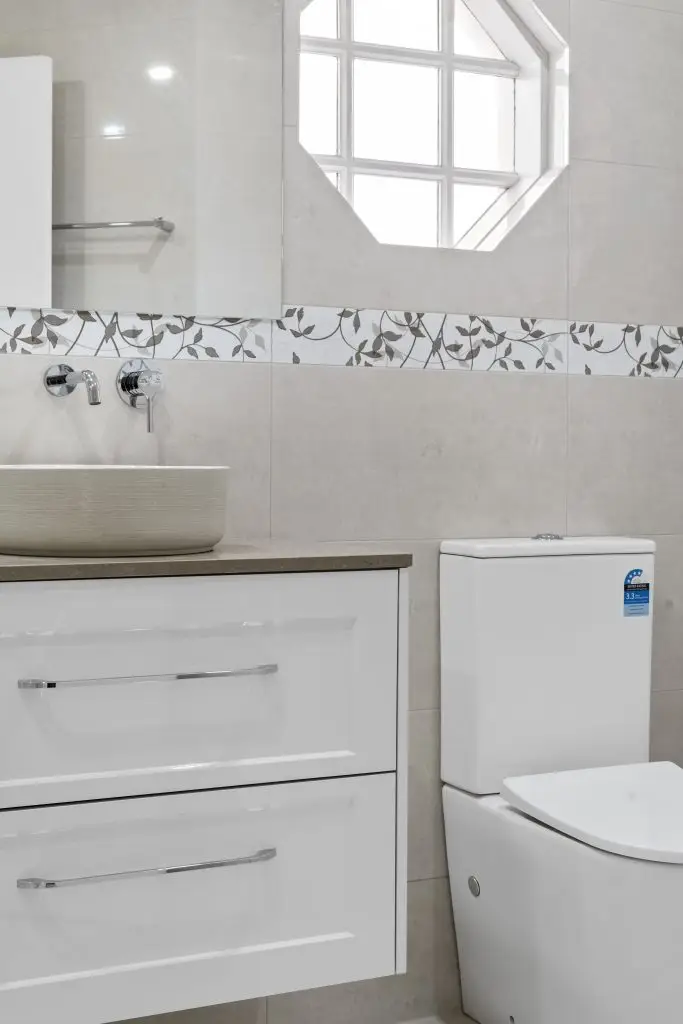
Art deco bathroom floor tiles can transform an ordinary bathroom into an elegant, distinctive space with timeless architectural character. Recognised for their geometric patterns, symmetrical arrangements and decorative detailing, Art Deco designs bring sophistication to bathroom interiors while allowing homeowners to express their personal style.
For Adelaide homeowners planning a bathroom renovation, choosing the right flooring involves more than finding an attractive pattern. Tiles need to complement the bathroom layout, coordinate with wall finishes and fixtures, provide suitable slip resistance and remain practical for everyday use.
From traditional black-and-white geometric designs to elegant fan-shaped patterns, decorative mosaics and contrasting borders, there are several ways to introduce Art Deco influences into a modern bathroom.
The key is finding the right balance between decorative appeal, quality materials and functionality. At Adelaide Bathroom Renovations, careful planning and coordinated design help bring these elements together.
Whether you are updating a small bathroom, creating a luxurious ensuite or planning a complete transformation, these seven ideas will help you choose flooring that delivers lasting visual appeal.
1. Art Deco Bathroom Floor Tiles: Embrace Geometric Patterns
Geometric patterns are among the most recognisable characteristics of Art Deco design. Repeating shapes, symmetrical arrangements and contrasting lines create visual interest and give bathroom floors a distinctive appearance.
When selecting art deco bathroom floor tiles, consider patterns that complement the proportions and layout of your bathroom.
Popular options include:
- Hexagonal tiles: A versatile geometric option that works with traditional and contemporary bathroom designs.
- Fan-shaped tiles: Inspired by classic Art Deco architecture, these create an elegant decorative effect.
- Chevron patterns: Repeated angled lines introduce movement and visual direction.
- Diamond patterns: Symmetrical arrangements create a sophisticated appearance.
- Mosaic designs: Smaller individual tiles can form intricate patterns, borders and feature sections.
The size and complexity of the pattern should suit the available floor space. Smaller bathrooms can benefit from consistent geometric designs that introduce character without making the room feel crowded. Larger bathrooms may accommodate more elaborate patterns, decorative borders or contrasting feature sections.
Before purchasing, consider how the pattern will align with the vanity, shower, toilet and doorway. A well-planned installation creates a balanced finish and prevents awkward cuts around important areas.
2. Choose Classic Colours for a Timeless Art Deco Look
Colour plays an important role in creating an authentic Art Deco-inspired bathroom.
Traditional designs often feature strong contrasts, particularly black and white. However, contemporary interpretations can incorporate softer shades while retaining the distinctive character of the style.
Consider these combinations:
- Black and white: A classic pairing that creates definition and visual contrast.
- White and charcoal: A softer alternative to pure black while maintaining a sophisticated appearance.
- Navy and cream: An elegant combination that introduces warmth and depth.
- Sage green and white: Suitable for homeowners who prefer a more understated decorative style.
- Warm beige and brass: A refined palette that complements warm metallic fixtures.
When choosing art deco bathroom floor tiles, consider how the colours will work with the vanity, wall tiles, tapware and lighting.
A practical approach is to select one dominant colour, one complementary shade and a limited number of accent finishes. This creates a coordinated design without introducing too many competing elements.
Review physical tile samples under the bathroom’s actual lighting conditions. Natural daylight, warm LED lighting and cooler artificial lighting can all affect how colours appear.
3. Use Decorative Borders to Create a Sophisticated Finish
Decorative borders are an effective way to introduce Art Deco character without covering the entire bathroom floor in an elaborate pattern.
A contrasting border can frame the main floor area, highlight a particular section or create a visual transition between different finishes.
For example, homeowners could consider:
- Neutral floor tiles surrounded by a black geometric border.
- Small mosaic tiles framing a larger patterned feature.
- A contrasting perimeter that complements the vanity and shower finishes.
- Decorative tile arrangements that distinguish the main bathroom from the shower area.
Borders should be incorporated into the bathroom design before installation begins.
Tile dimensions, grout spacing, doorway positions and shower floor gradients can influence the final arrangement. A pattern that looks balanced on a sample board may require adjustments once it is fitted to the actual room.
Planning the layout early helps reduce unnecessary cutting and ensures that the finished floor looks intentional.
4. Balance Patterned Flooring with Simple Wall Finishes
One of the most important considerations when using art deco bathroom floor tiles is knowing where to introduce decorative detail and where to keep things simple.
If the floor already features a strong geometric pattern, equally elaborate wall finishes can make the room feel visually crowded.
Instead, consider pairing decorative flooring with understated wall materials.
Some complementary combinations include:
- Black-and-white geometric flooring with simple white wall tiles.
- Navy patterned flooring with warm neutral walls.
- Decorative mosaic flooring with understated stone-look finishes.
- Fan-pattern flooring with simple cabinetry and minimal hardware.
This approach allows the flooring to become the main feature without competing with other design elements.
The vanity, shower screen and tapware should support the overall appearance rather than introduce unnecessary visual distractions.
For homeowners considering luxury bathroom renovations in Adelaide, this balance is particularly important. A premium-looking bathroom does not require expensive finishes on every surface. A carefully selected feature tile, quality cabinetry and coordinated fixtures can create a sophisticated result.
5. Consider Slip Resistance, Grout and Everyday Maintenance
While appearance is important, bathroom flooring must also perform well under everyday conditions.
Bathrooms are regularly exposed to water, moisture and cleaning products. The tile’s surface, texture, size and installation all influence how practical it will be.
Before choosing art deco bathroom floor tiles, consider the following factors.
Slip resistance
Ask the tile supplier for the product’s slip-resistance classification and supporting test information. Australian Standard AS 4586 covers testing methods for slip resistance of pedestrian surfaces.
The appropriate finish depends on where the tile will be installed, particularly in areas exposed to regular water. Do not assume that every matte or textured tile automatically provides suitable grip.
Grout selection
Grout colour can significantly change the appearance of geometric flooring.
A contrasting grout makes individual tile shapes more noticeable, while a closer colour match creates a more continuous appearance. Consider cleaning requirements and long-term maintenance before choosing a highly contrasting grout.
Tile size
Smaller mosaic tiles create more grout joints and can be useful where the floor requires detailed shaping or falls towards a waste. Larger tiles create fewer joints but may not suit every bathroom layout or shower floor.
Cleaning requirements
Highly textured finishes and intricate grout arrangements may require additional cleaning. Ask the supplier about suitable cleaning products and ongoing maintenance before making your selection.
For further information about Australian building and waterproofing requirements, consult the Australian Building Codes Board, which provides official resources about the National Construction Code and building compliance.
6. Coordinate Flooring with Vanity, Tapware and Lighting
Art Deco-inspired bathrooms are recognised for their attention to detail. The overall result depends on how the floor works with the remaining fixtures and finishes.
Consider coordinating your flooring with the following elements.
Vanity cabinetry
Simple cabinetry can balance elaborate geometric flooring. Timber-inspired finishes, neutral cabinetry and streamlined designs can complement decorative patterns without competing for attention.
Tapware
Brushed brass, polished chrome and other metallic finishes can complement traditional Art Deco colour schemes. Choose finishes that work with the rest of the bathroom rather than mixing too many unrelated styles.
Mirrors
Rounded, arched or decorative mirror shapes can introduce another subtle reference to classic Art Deco interiors.
Lighting
Carefully positioned feature lighting can highlight decorative tile patterns and create a more inviting atmosphere. Consider how lighting will work around the vanity, shower and other functional areas.
Shower screens
Frameless glass can help maintain clear sightlines and prevent the room from feeling visually divided.
When choosing art deco bathroom floor tiles, select these elements as part of one overall design rather than making each decision independently.
For example, black-and-white geometric flooring paired with a white vanity, polished chrome fixtures and a decorative mirror can create a classic appearance. Alternatively, warm-toned flooring, brass details and timber-inspired cabinetry can introduce a softer contemporary interpretation.
The objective is to create a bathroom that feels coordinated, comfortable and suitable for everyday living.
7. Plan Your Art Deco Bathroom Floor Tiles Before Renovation Begins
Tile selection should happen early in the bathroom renovation planning process.
The chosen pattern can influence floor preparation, tile quantities, cutting requirements, grout selection and installation time. These details are easier to coordinate before demolition and construction begin.
Start by measuring the existing bathroom and identifying the areas where patterned flooring will be installed.
Your planning checklist should include:
- Floor measurements: Confirm the total area and required tile quantities.
- Bathroom layout: Identify the position of the shower, vanity, toilet and doorway.
- Pattern direction: Decide how the geometric design should align throughout the room.
- Cutting requirements: Consider corners, edges and areas around fixtures.
- Grout selection: Confirm the preferred grout colour and joint spacing.
- Product suitability: Check that the selected tiles are appropriate for their intended wet-area application.
- Installation requirements: Confirm floor preparation, waterproofing and drainage requirements with the renovation team.
Allow for additional tiles to accommodate cutting, pattern alignment and potential future replacements. The final quantity should be confirmed with the supplier or installer based on the actual layout.
Waterproofing, floor preparation and drainage must also be considered as part of the renovation scope. Decorative tiles cannot compensate for poor preparation or inadequate wet-area construction.
Homeowners in South Australia can also refer to the South Australian Government’s building and development information for information about building requirements and approval considerations.
A properly coordinated renovation considers both the visible finishes and the construction work beneath them.
8. Common Mistakes to Avoid When Choosing Art Deco Bathroom Floor Tiles
Even beautiful art deco bathroom floor tiles can produce disappointing results when important design and installation details are overlooked.
Before committing to a particular style, avoid these common mistakes.
Choosing patterns without measuring the room
A detailed geometric pattern may look attractive in a showroom but appear unbalanced when installed in a smaller bathroom. Always consider the actual dimensions and layout before ordering.
Using too many decorative finishes
Combining elaborate floor tiles, patterned wall tiles, decorative cabinetry and multiple metallic finishes can make the room feel overwhelming. Establish a dominant feature and let the remaining finishes complement it.
Ignoring grout colour
Grout is an important part of geometric tile design. Choosing the wrong shade can change the appearance of the entire pattern. Review grout samples alongside the actual tiles before installation.
Prioritising appearance over performance
A decorative finish must still be appropriate for the intended bathroom application. Check slip resistance, cleaning requirements and product specifications before purchasing.
Leaving tile decisions until construction begins
Late selections can create avoidable delays and installation complications. Finalise the tile design, quantities and relevant materials before demolition wherever possible.
Avoiding these mistakes helps create an art deco bathroom floor tiles inspired bathroom that looks cohesive and performs well over time.
Frequently Asked Questions About Art Deco Bathroom Floor Tiles
Are Art Deco bathroom floor tiles suitable for small bathrooms?
Yes. Geometric patterns can introduce character into smaller bathrooms when selected carefully. Consistent patterns, lighter colour schemes and coordinated wall finishes can help maintain a balanced appearance without making the room feel visually crowded.
What colours work best with art deco bathroom floor tiles?
Black and white are classic choices, while navy, cream, charcoal, sage green and warm beige offer contemporary alternatives. The best combination depends on your cabinetry, wall finishes, tapware and lighting.
Are patterned bathroom floor tiles difficult to maintain?
Maintenance depends on the tile material, surface texture, grout arrangement and cleaning products used. Smaller mosaics and textured finishes may require more attention. Ask your supplier about recommended cleaning procedures before purchasing.
Can art deco bathroom floor tiles be used in shower areas?
Some art deco bathroom floor tiles are suitable for shower floors, but suitability depends on their specifications, slip resistance, size and installation requirements. Always confirm the product is appropriate for the intended wet area application.
Do Art Deco bathroom tiles suit modern bathrooms?
Absolutely. Art deco bathroom floor tiles patterns can complement contemporary bathrooms when balanced with simple cabinetry, streamlined tapware, neutral wall finishes and practical shower screens.
Should I use art deco bathroom floor tiles throughout the entire bathroom?
Not necessarily. Using decorative tiles as a feature floor or within a defined area can create a more balanced result. The choice depends on the room’s dimensions and the overall design direction.
Create a Bathroom with Timeless Art Deco Bathroom Floor Tiles Character
The right art deco bathroom floor tiles can give your bathroom a distinctive identity while complementing the rest of your home’s design.
The best results come from balancing decorative patterns with practical materials, suitable slip resistance, coordinated fixtures and professional installation.
If you are planning a bathroom renovation with art deco bathroom floor tiles in Adelaide, speak with Adelaide Bathroom Renovations about your ideas, preferred finishes and project requirements.
With coordinated renovation management and attention to design details, the team can help bring your bathroom vision together.
Visit Adelaide Bathroom Renovations to explore our art deco bathroom floor tiles renovation services and arrange a consultation.
Start planning an art deco bathroom floor tiles bathroom that reflects your style, complements your home and works beautifully for everyday living.