
Creating a designer bathroom involves more than choosing attractive tiles, tapware and cabinetry. A successful design brings together functionality, comfort, quality materials and thoughtful planning to create a space that works beautifully every day. Whether you are updating a compact ensuite or planning a complete bathroom transformation, the right decisions can make a significant difference to the finished result.
For Adelaide homeowners, bathroom design should also consider the property’s existing layout, natural light, ventilation and practical requirements. Selecting finishes that complement one another is important, but the underlying construction, plumbing, waterproofing and installation quality are equally essential.
A well planned designer bathroom balances visual appeal with everyday practicality. By considering how the room will be used, choosing suitable materials and establishing a coordinated design direction, you can create a bathroom that feels comfortable, cohesive and timeless.
1. Start with a Functional Designer Bathroom Layout
Before choosing colours or decorative finishes, consider how the bathroom needs to function. The layout influences everything from movement and accessibility to storage and cleaning.
A well designed bathroom should provide sufficient clearance around the vanity, toilet, shower and bath. Doors, drawers and shower screens should open without obstructing other fixtures. These details are particularly important in smaller Adelaide homes, where making efficient use of available floor space can improve the overall experience.
Consider the following when planning your designer bathroom layout:
- Movement: Allow comfortable access between fixtures and avoid unnecessary obstructions.
- Storage: Include practical cabinetry, shelving and vanity storage for everyday essentials.
- Shower positioning: Consider the shower entry, screen configuration and available space.
- Lighting: Plan suitable lighting for grooming, cleaning and general use.
- Accessibility: Consider current and future household requirements.
Keeping the existing plumbing positions can sometimes simplify construction and reduce unnecessary work. However, relocating fixtures may be worthwhile when the current arrangement limits functionality.
The best designer bathroom begins with a layout that supports your household rather than forcing you to work around an impractical design.
2. Choose a Coordinated Designer Bathroom Colour Palette
Colour plays an important role in establishing the atmosphere of a bathroom. The right combination can make a space feel warm, relaxing, contemporary or understated.
Neutral colours remain popular because they provide flexibility when selecting fixtures and accessories. Warm whites, beige, soft grey and natural stone inspired finishes can create a calm foundation. For homeowners wanting more character, darker cabinetry, textured tiles or carefully selected feature walls can introduce visual interest.
When developing your colour palette, consider how different finishes will work together.
For example, warm toned tiles can complement timber look cabinetry and brushed brass tapware. Alternatively, cooler grey surfaces paired with matte black fixtures can create a more contemporary appearance.
Before finalising your selections, request physical samples and view them together under the bathroom’s lighting conditions. Colours can appear different depending on natural light, artificial lighting and surrounding materials.
A consistent palette helps create a designer bathroom that feels intentional rather than overcrowded with competing finishes.
Transforming an existing bathroom requires careful planning, suitable material selections and coordination between different trades. From the initial measurements and design decisions through to construction and final installation, each stage contributes to the overall result.
3. Select Materials That Combine Style and Durability
Bathroom materials must withstand regular exposure to moisture, cleaning products and everyday use. While appearance is important, durability and maintenance should also influence your decisions.
Porcelain tiles are a popular option for bathroom floors and walls because they are available in various colours, textures, sizes and finishes. Natural stone can provide a distinctive appearance, although some products require additional sealing and ongoing maintenance.
When comparing bathroom renovation materials, consider:
- Floor tiles: Select suitable slip resistant surfaces for wet areas.
- Wall tiles: Consider how tile size, pattern and grout colour influence the overall appearance.
- Vanity finishes: Choose cabinetry materials and finishes appropriate for bathroom conditions.
- Shower screens: Frameless and semi frameless options can create different visual effects.
- Tapware: Select finishes that complement the overall colour scheme and are practical to maintain.
Large format tiles can create a more continuous appearance by reducing the number of grout lines. Smaller decorative tiles can introduce texture and personality when used selectively.
For a designer bathroom, the goal is not necessarily to choose the most expensive materials. It is to select products that suit the space, complement one another and provide lasting functionality.
4. Make the Vanity a Feature of Your Bathroom Design
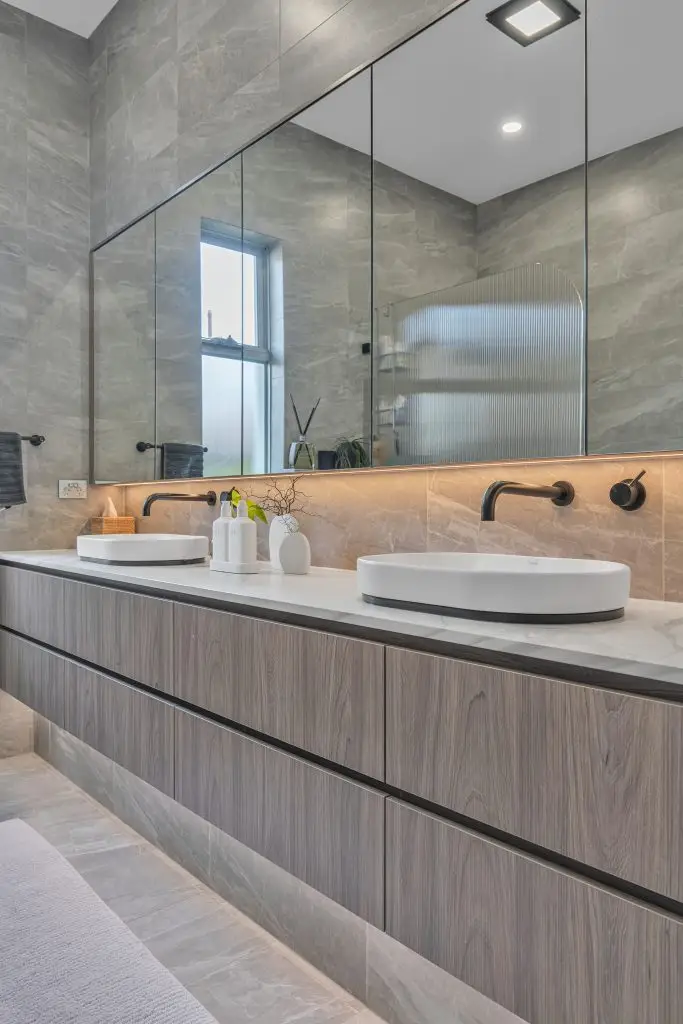
The vanity is often one of the most noticeable elements in a bathroom. It provides essential storage while contributing significantly to the room’s overall style.
Floating vanities are popular in contemporary bathrooms because they create an open visual effect and make floor cleaning easier. Wall mounted cabinetry can also help smaller spaces feel less crowded.
Consider the following vanity features:
- Wall mounted or floor standing cabinetry.
- Single or double basins depending on available space.
- Integrated drawers for organised storage.
- Durable benchtop materials.
- Mirrors with integrated or complementary lighting.
- Tapware that suits the basin and overall design.
Storage should be considered early in the planning process. A visually attractive vanity may become inconvenient if it does not provide enough room for toiletries, cleaning products and household essentials.
For a more cohesive designer bathroom, coordinate the vanity finish with the wall tiles, flooring, mirror and tapware.
5. Use Lighting and Mirrors to Improve the Space
Lighting influences how a bathroom looks and feels. A combination of general lighting and task lighting can improve visibility while creating a comfortable atmosphere.
Ceiling lighting provides general illumination, while carefully positioned vanity lighting supports activities such as shaving, applying makeup and personal grooming.
Mirrors can also help enhance the appearance of a bathroom. A large mirror can create a greater sense of openness, particularly in a compact ensuite or smaller bathroom.
When planning lighting, consider:
- General illumination throughout the room.
- Suitable task lighting around the vanity.
- Appropriate lighting near the shower and bath.
- Mirror positioning and reflection.
- Energy efficient lighting options.
Electrical installations in bathrooms must be designed and installed in accordance with applicable requirements for wet areas. Engage appropriately qualified trades to determine suitable fittings, locations and protection.
A thoughtful lighting plan can make a designer bathroom more practical without relying on decorative features alone.
6. Prioritise Waterproofing, Ventilation and Workmanship
Some of the most important parts of a bathroom renovation are not immediately visible. Waterproofing, drainage, ventilation and installation quality protect the room and support its long term performance.
Waterproofing is particularly important because moisture can affect surrounding building materials when wet areas are not properly protected. The Australian Building Codes Board provides guidance on waterproofing requirements under the National Construction Code.
Homeowners can refer to the ABCB guide to waterproofing in residential buildings to understand the importance of compliant wet area construction.
Ventilation also deserves attention. Bathrooms produce moisture through showers and baths, and inadequate ventilation can contribute to condensation and mould problems.
Consider suitable exhaust ventilation, particularly where natural airflow is limited. The ventilation solution should be appropriate for the room and comply with applicable building requirements.
Water efficient fixtures are another worthwhile consideration. Australia’s Water Rating website explains how WELS ratings help homeowners compare the water efficiency of taps, showers and toilets.
A beautiful designer bathroom should perform as well as it looks. Prioritising qualified trades, appropriate materials and compliant installation helps protect the finished renovation.
7. Bring the Design Together with Thoughtful Finishing Details
The final details help give a bathroom its character. Small design decisions can influence whether the completed space feels coordinated and refined.
Consider how the following elements contribute to the overall designer bathroom appearance:
- Tapware finishes: Coordinate basin, shower and bath fittings.
- Shower screens: Choose a configuration that complements the layout.
- Mirrors: Select shapes and sizes that suit the vanity.
- Accessories: Coordinate towel rails, hooks and toilet roll holders.
- Storage: Incorporate recessed niches and practical shelving where suitable.
- Grout: Choose colours that complement the surrounding tiles.
Avoid introducing too many competing finishes. Repeating selected materials and colours throughout the room creates visual consistency.
It is also worth considering maintenance before making final decisions. Textured finishes, exposed shelving and intricate details may require additional cleaning.
A successful designer bathroom should reflect your preferred style while remaining comfortable and practical for everyday living.
Plan Your Designer Bathroom with Adelaide Bathroom Renovations
Transforming an existing bathroom requires careful planning, suitable material selections and coordination between different trades. From the initial measurements and design decisions through to construction and final installation, each stage contributes to the overall result.
At Adelaide Bathroom Renovations, homeowners can discuss their renovation requirements and explore practical design options for their property.
If you are considering a contemporary ensuite, a more functional family bathroom or a complete transformation, having a clear plan helps bring your ideas together.
Start planning your designer bathroom by arranging a consultation with Adelaide Bathroom Renovations. Discuss your preferred finishes, layout, storage requirements and renovation goals to take the next step towards a designer bathroom that looks beautiful and works for your household.
Need a reliable tradie for your next project? Trade Focus provides property maintenance and electrical services across Adelaide, helping homeowners, property managers and businesses keep their properties safe, functional and well maintained.